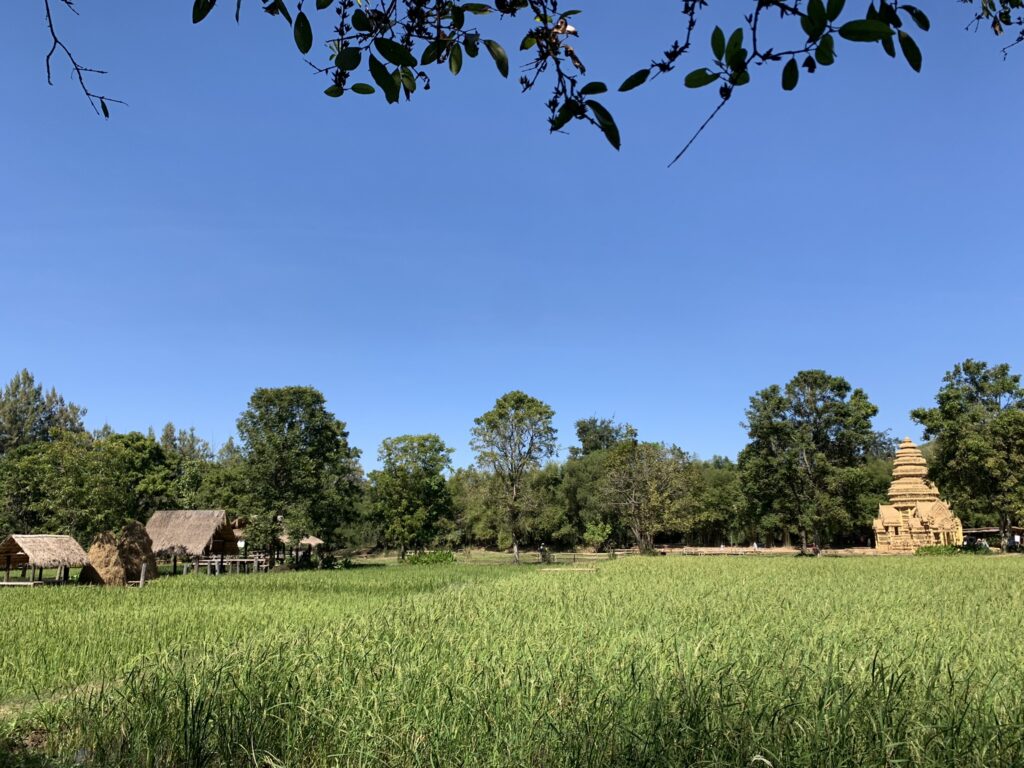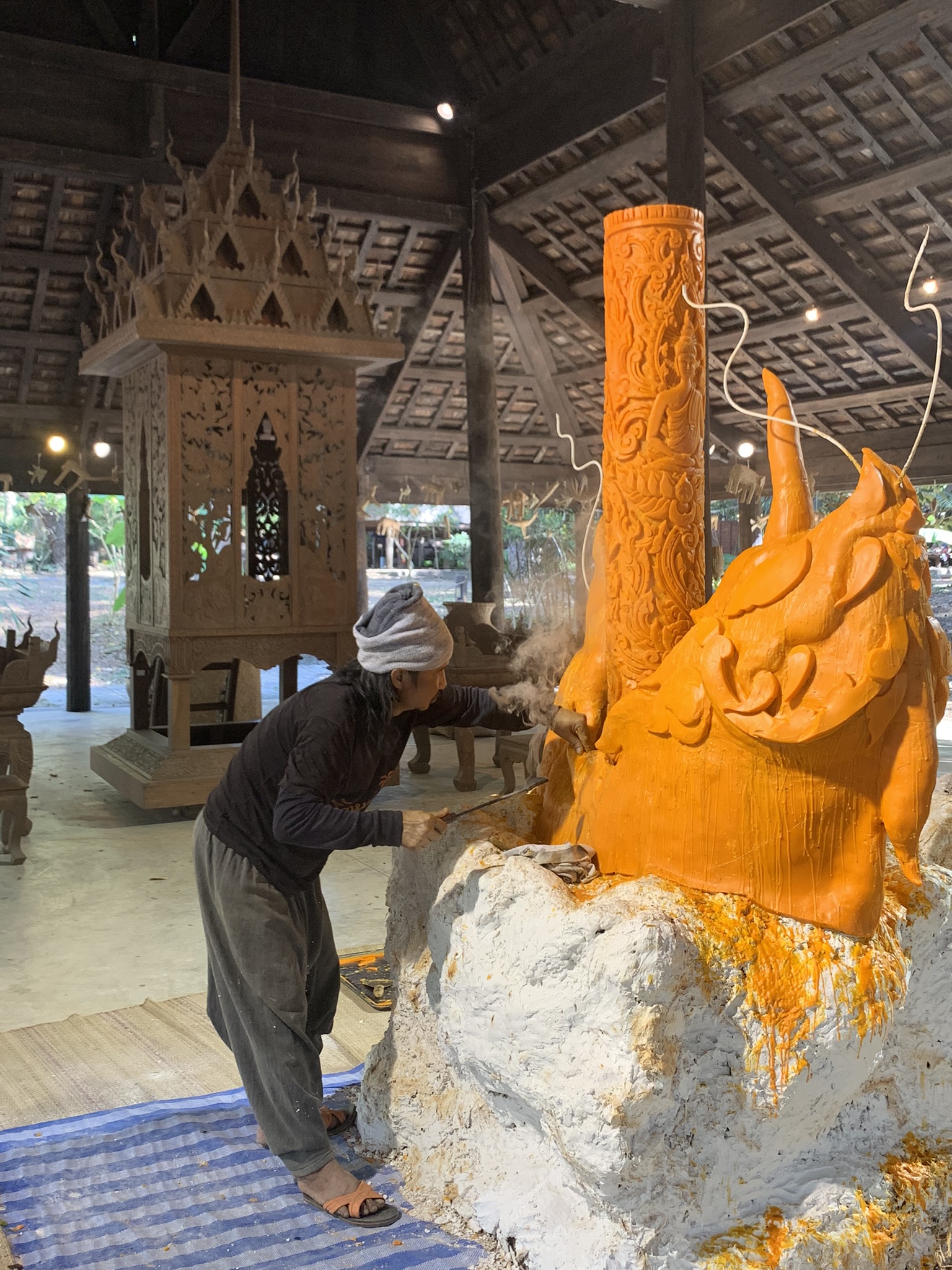
Tucked away in the southern part of Nakhon Ratchasima province, about a 4-hour drive from Bangkok or just over an hour from Pak Chong, Pak Thong Chai is a quiet, underrated destination rich in tradition, culture, and nature. Far from the crowds, this tranquil town offers a refreshing escape into the northeastern region of Thailand—Isaan—inviting travellers to slow down and explore its heritage and pastoral charm.
The Story Behind the Name “Pak Thong Chai” (ปักธงชัย)
The name has a fascinating historical and cultural origin rooted in Thai history:
- “Pak” (ปัก) means “to plant” or “to stake.”
- “Thong” (ธง) means “flag.”
- “Chai” (ชัย) means “victory.”
Together, Pak Thong Chai literally means “planting the flag of victory.”
This name is believed to stem from a military campaign during the Ayutthaya period, when Thai armies marked territorial victories by planting flags. One legend suggests that King Narai the Great—or possibly an earlier monarch—led a victorious campaign in this region and symbolically planted a flag here.
Another interpretation links the name to royal administrative practices, where flags were ceremonially raised to assert the kingdom’s authority over new territories or outposts.
Timeless Temples and Sacred Spaces
Pak Thong Chai is home to several ancient temples that reflect its deep spiritual roots. Wander through peaceful temple grounds where centuries-old architecture mingles with the gentle sound of rustling leaves and temple bells.
In December 2023, my family and I visited Wat Pathum Khongkha and Wat Na Phra That after our trip to the Jim Thompson Farm.
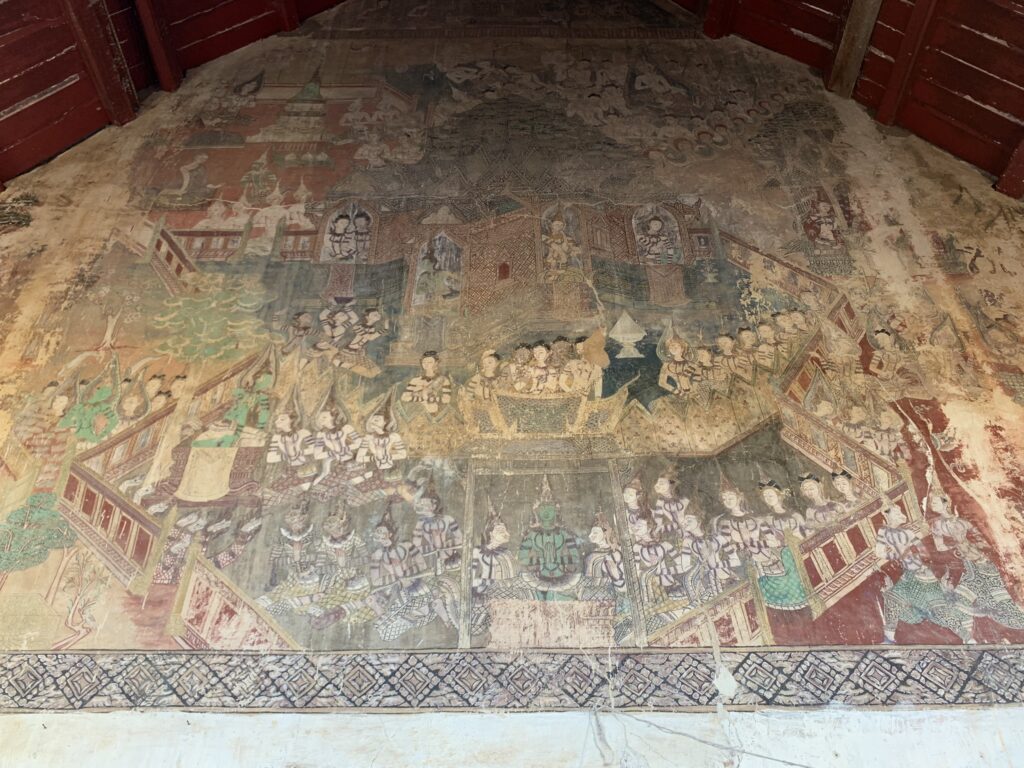
Wat Pathum Khongkha, also known as Wat Nok Ok, is a Mon temple built in 1774. Its highlights include an ancient Hor Trai (Buddhist scripture hall) situated in the middle of a pond, and an old Ubosot (ordination hall) with ceiling and wall murals influenced by Ayutthaya and early Rattanakosin art.
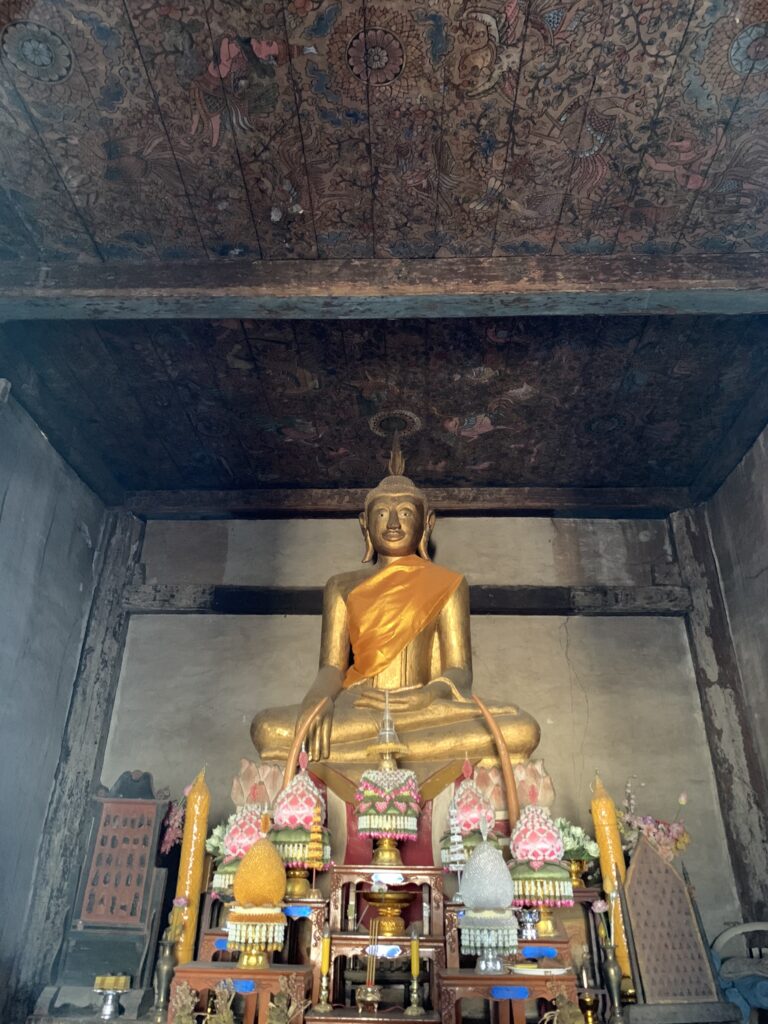
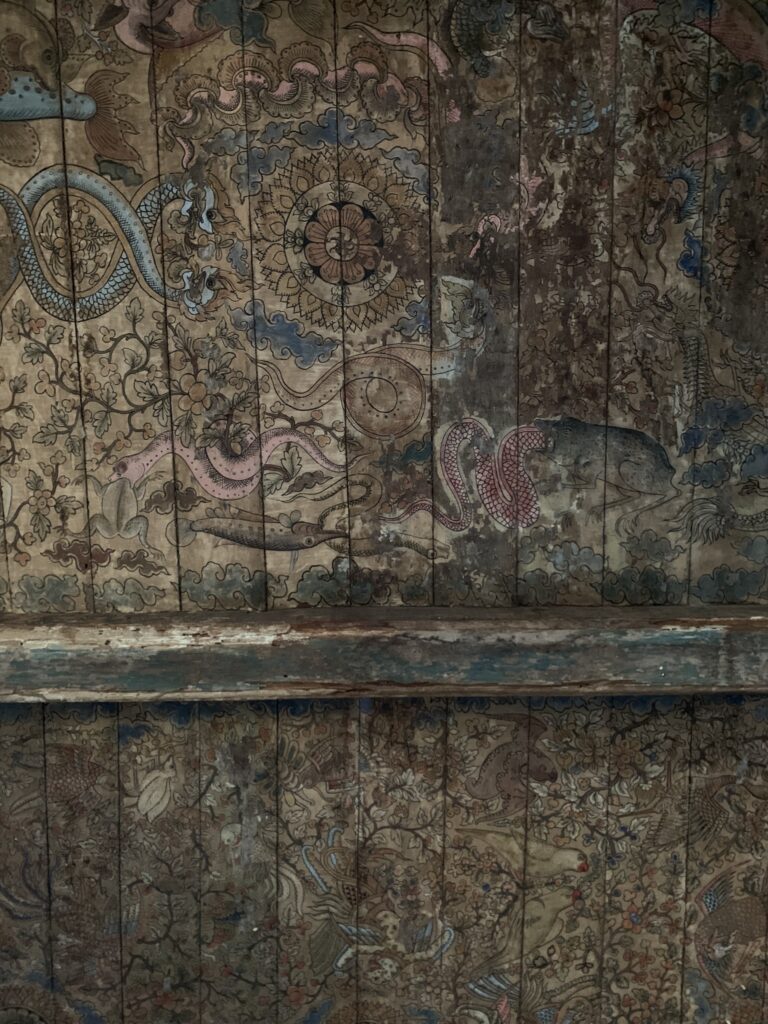
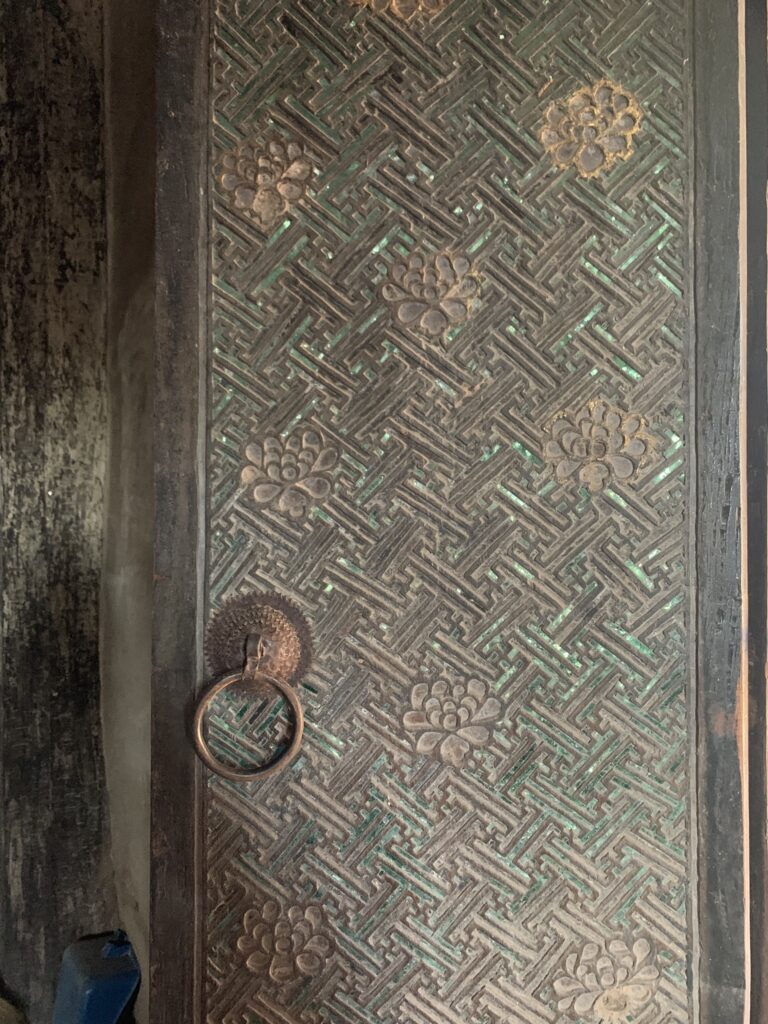
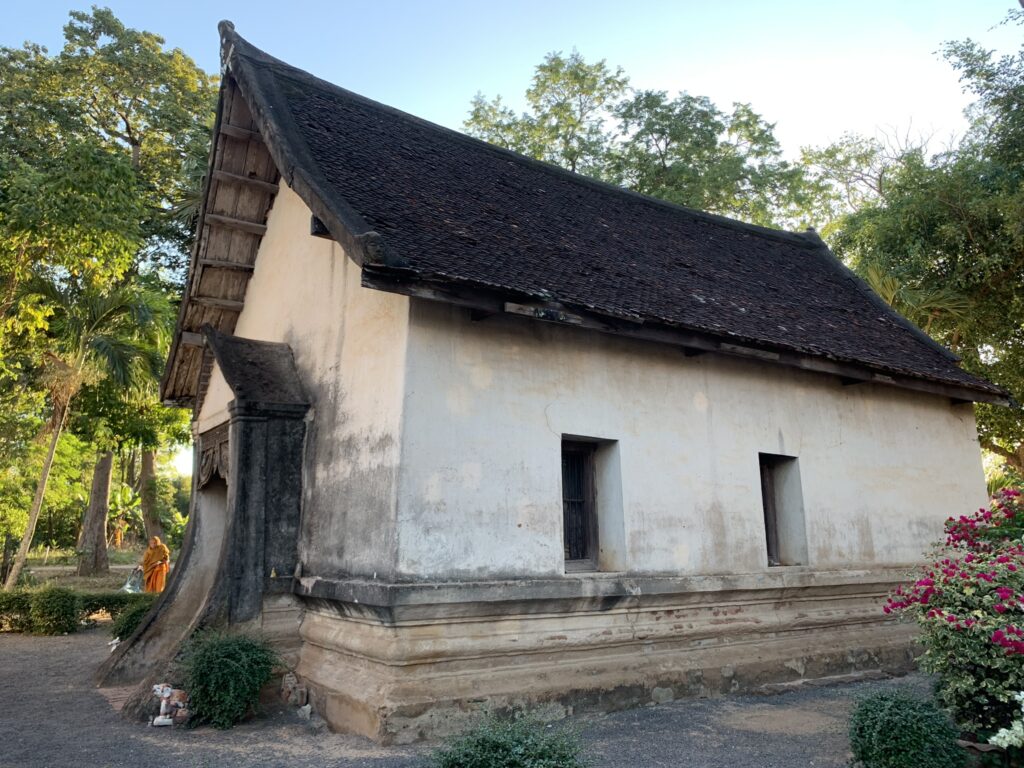
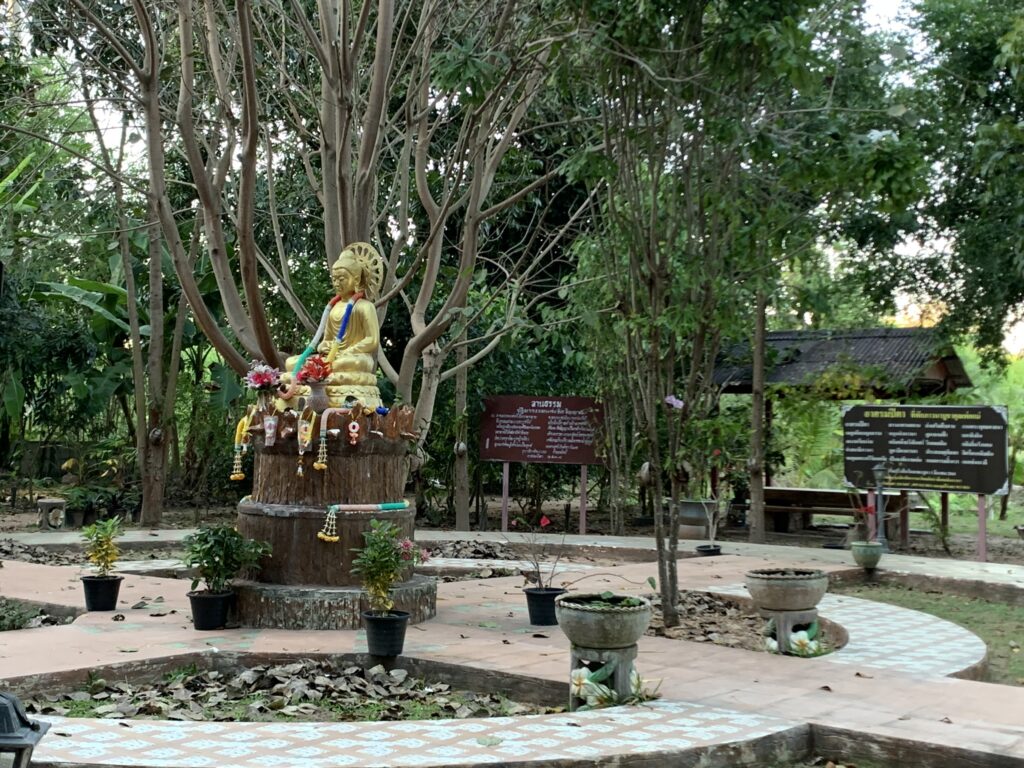
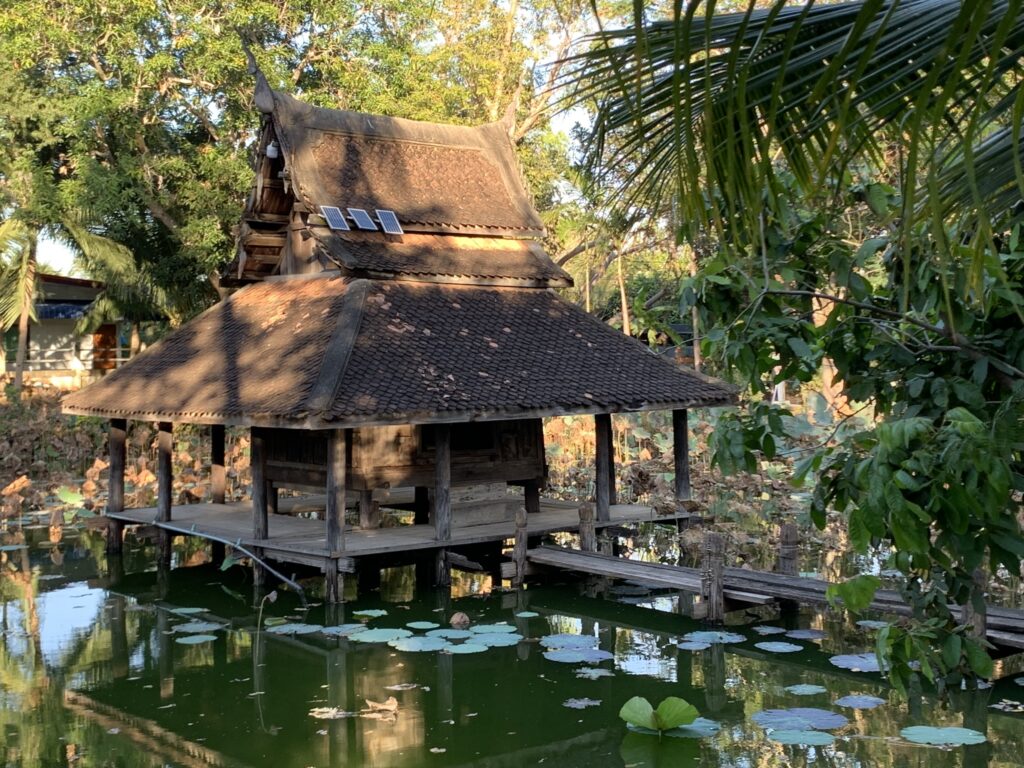
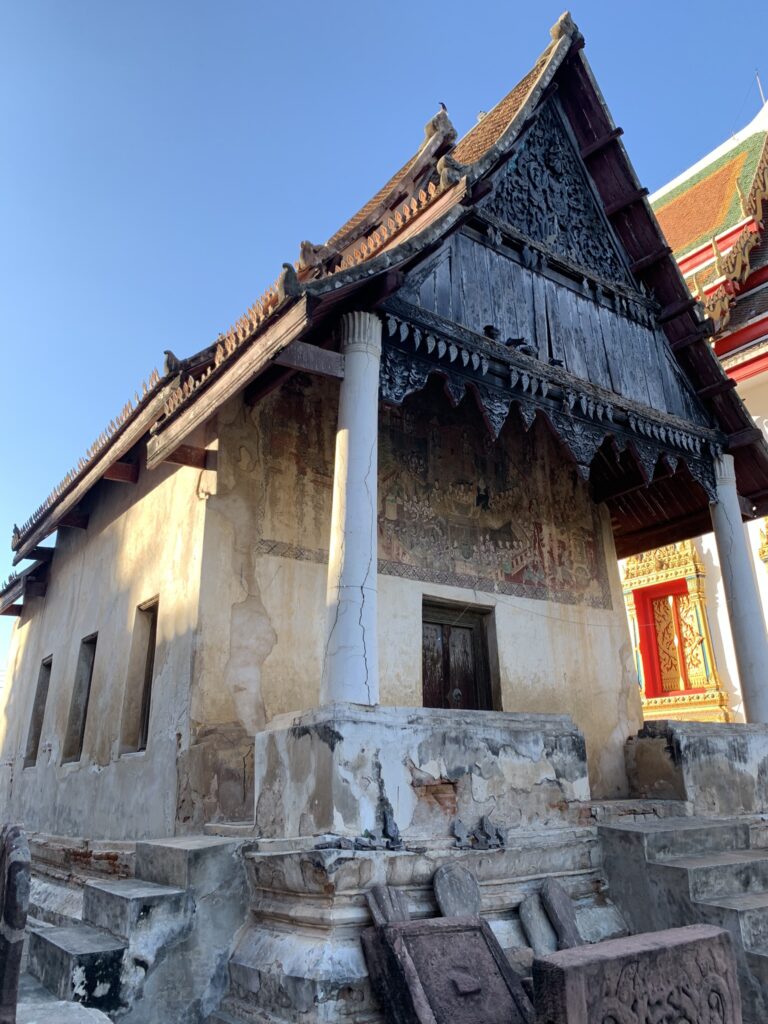
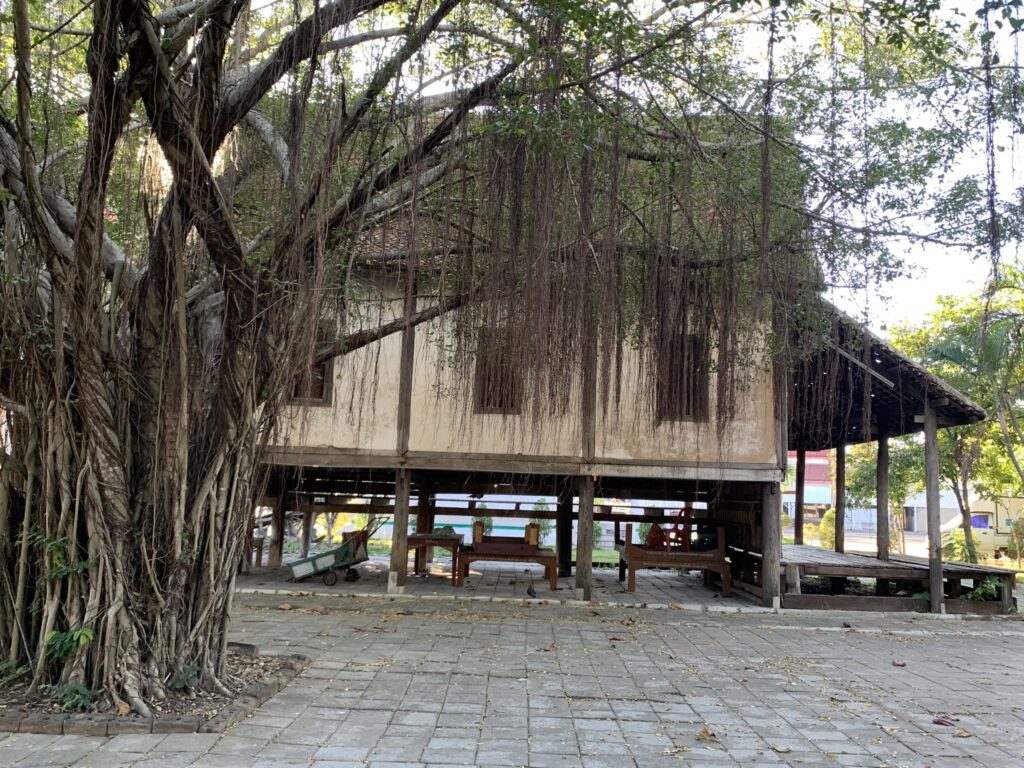
Wat Na Phra That, locally known as Wat Takhu, was founded in 1787. The temple features an old main hall, a Buddhist scripture hall also in the middle of the pond, and an old monk’s hut. The main hall was locked during our visit, and from its appearance, I wasn’t sure if visitors are allowed inside—the foundation looked unstable. Interestingly, the building rests on a base that slightly curves inward in the middle, a style believed to date back to the late Ayutthaya or early Rattanakosin period. Faded murals still adorn the outer walls, with the one above the front door being the most intact.
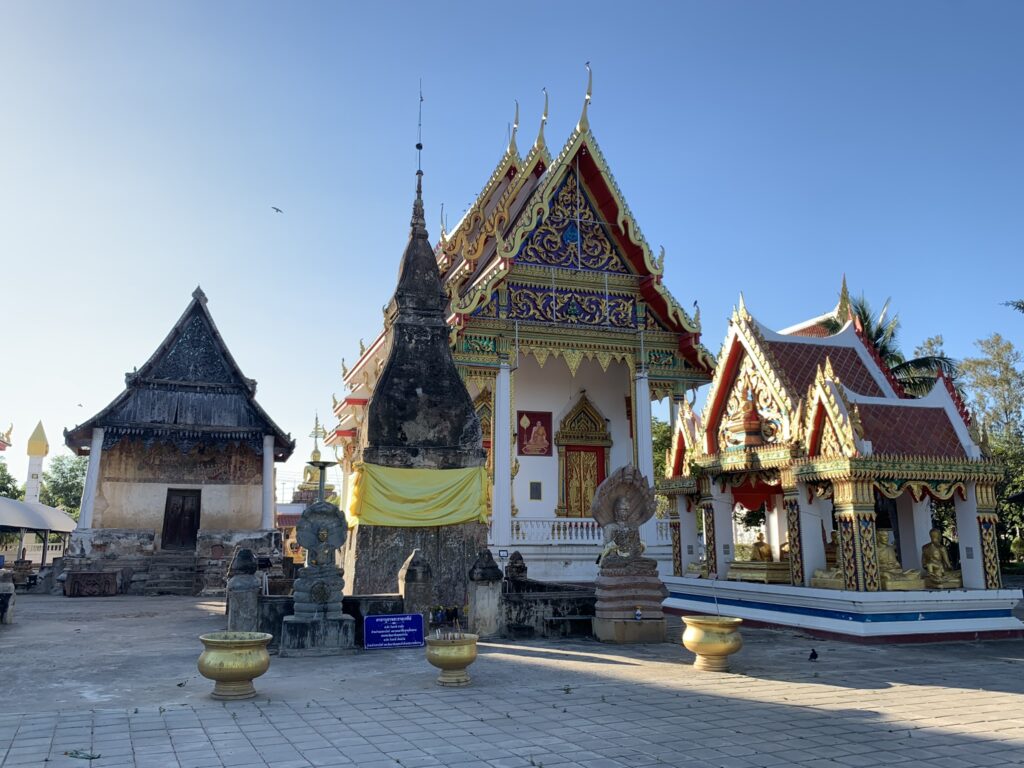
The scripture hall here was also built in the middle of a pond. It’s believed that doing so would protect ancient Tripitaka leaf manuscripts from insects like ants and termites. Access is by a temporary bridge that can be removed after use.
The old monk’s hut was also closed, so I couldn’t see inside.
Both temples were incredibly peaceful. Apart from us, the only person there was a monk going about his afternoon chores.
A Journey Through Local Farms and Countryside
The surrounding landscape is dotted with small-scale farms growing rice, vegetables, and flowers. Some farms sell their fresh produce roadside, offering a glimpse into the rhythms of local life. The countryside here is ideal for a leisurely drive or even a bike ride through quiet, scenic backroads.
A Village Known for Silk and Craftsmanship
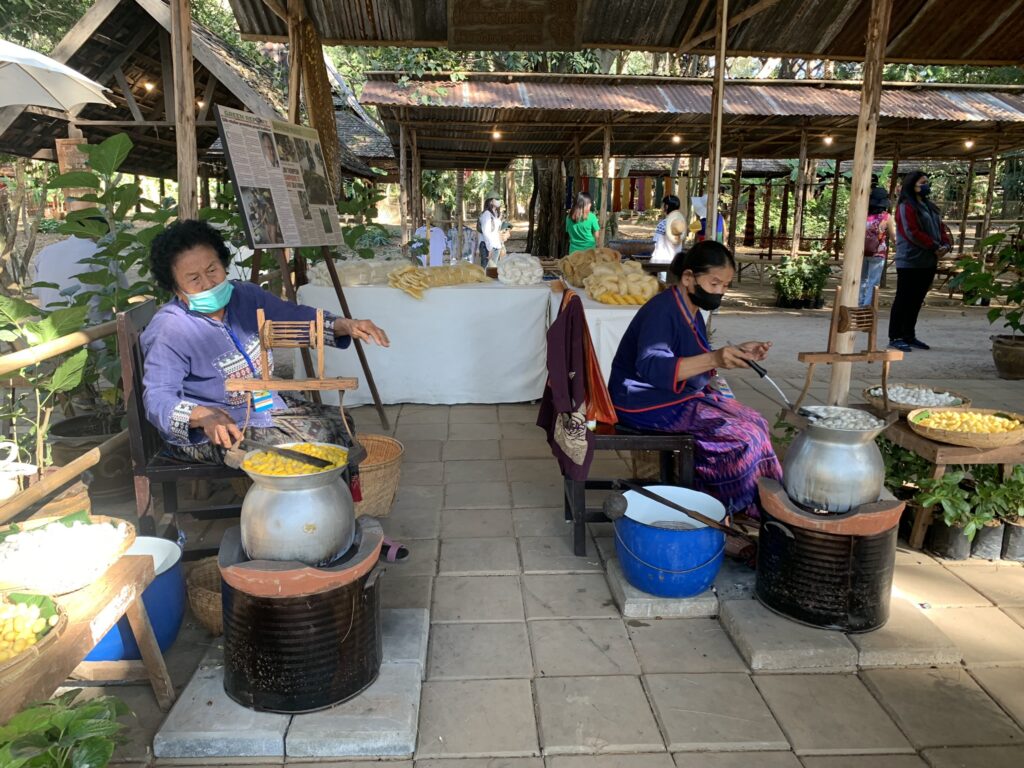
Pak Thong Chai has long been recognised as one of Thailand’s most important silk-weaving communities. Generations of artisans continue to hand-weave exquisite silk using traditional looms and natural dyes. Visiting a local weaving village lets you witness this beautiful craft in action—and support local artists by purchasing directly from the makers.
The Jim Thompson Farm: A Cultural and Sustainable Showcase
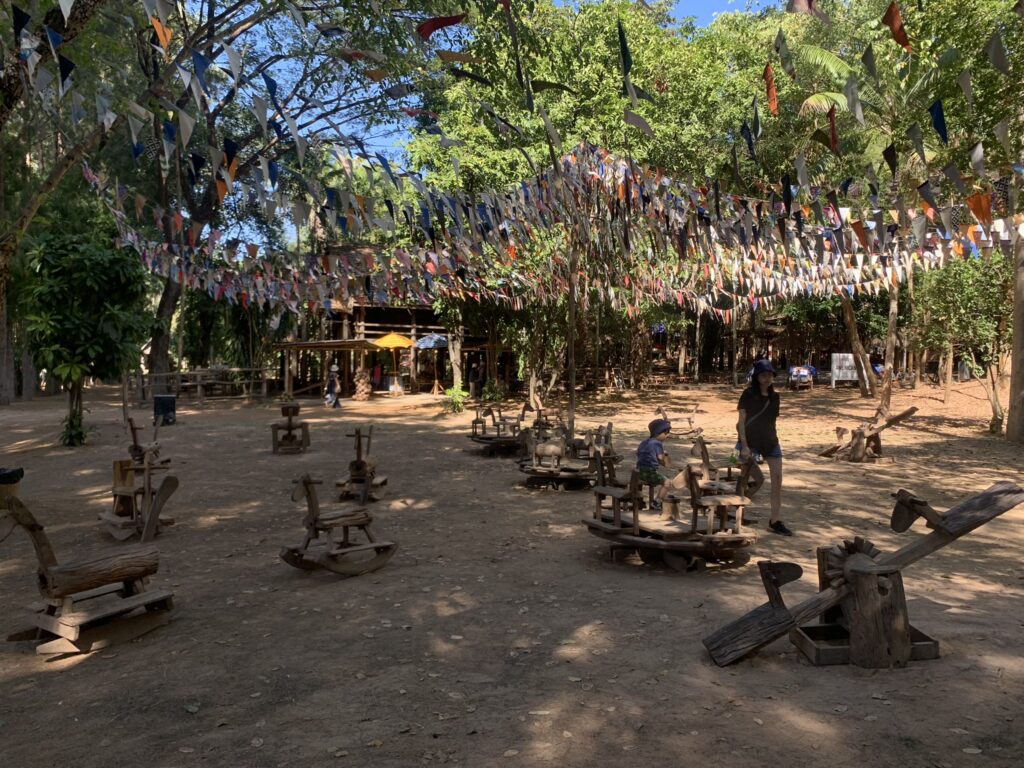
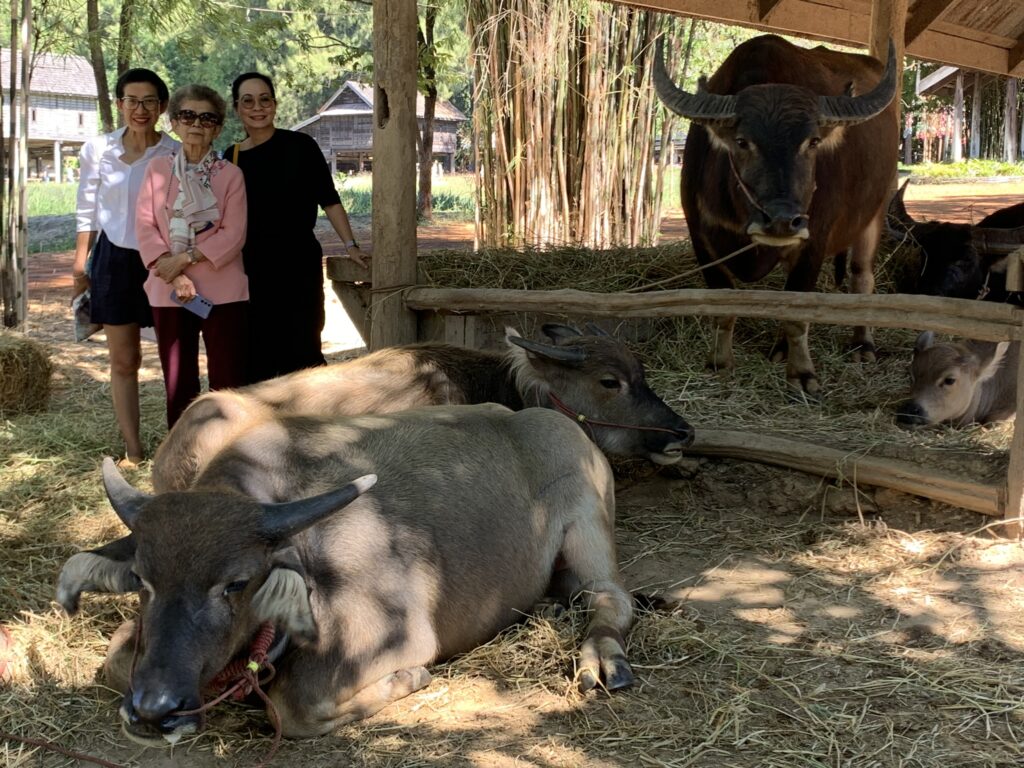
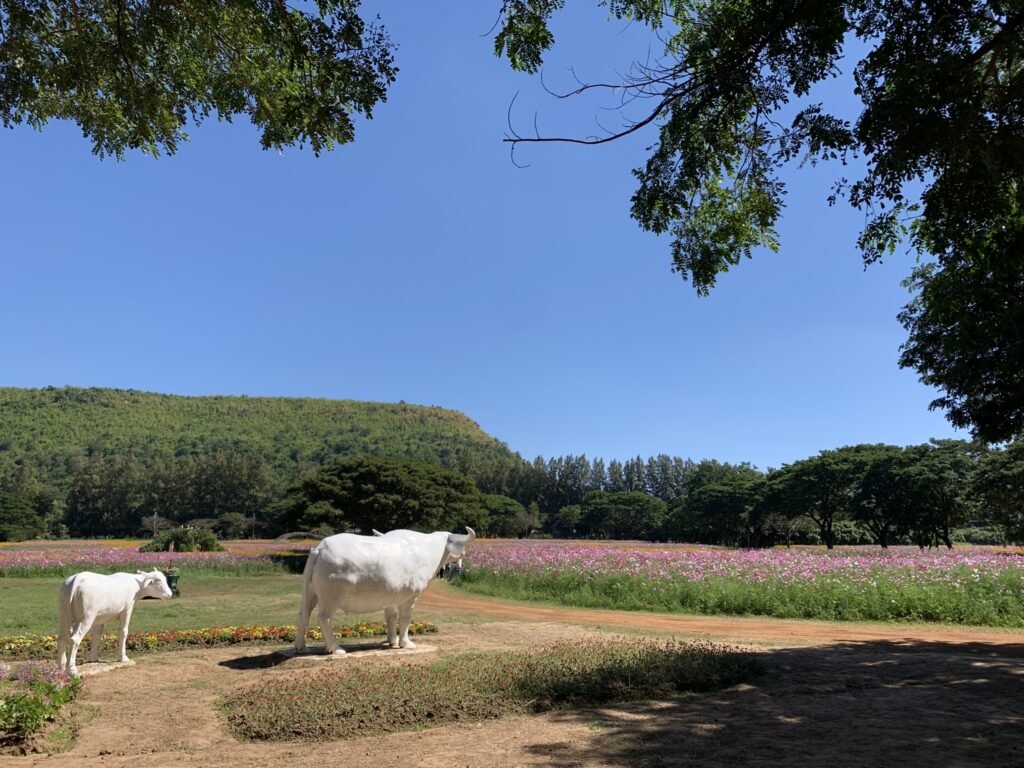
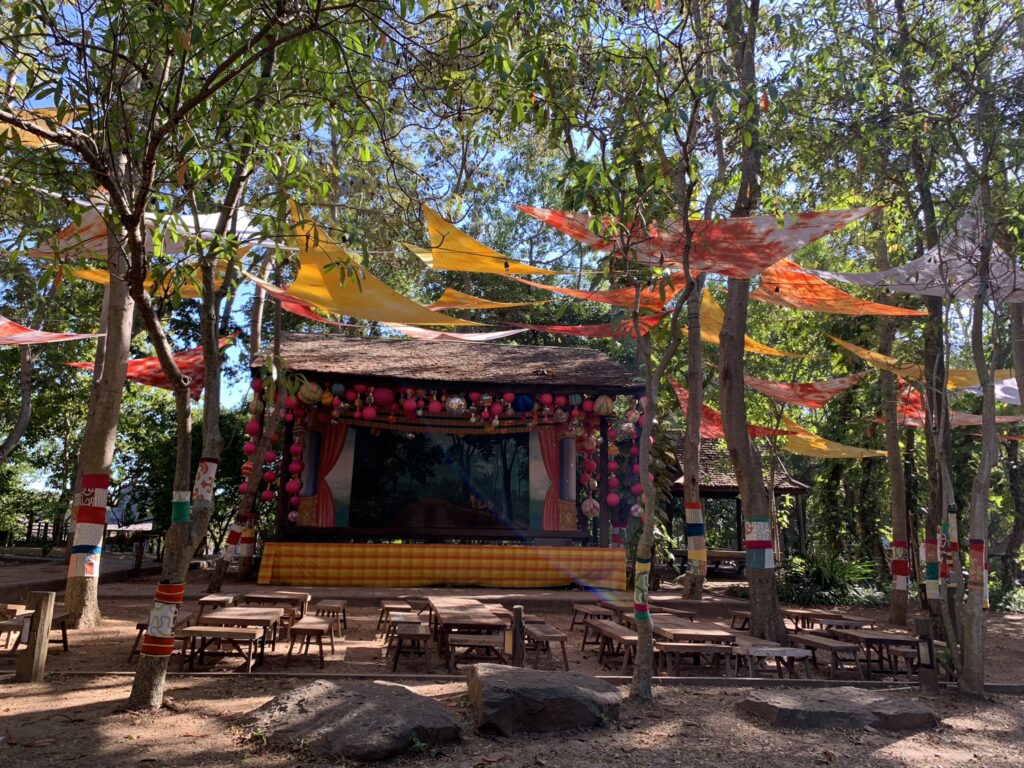
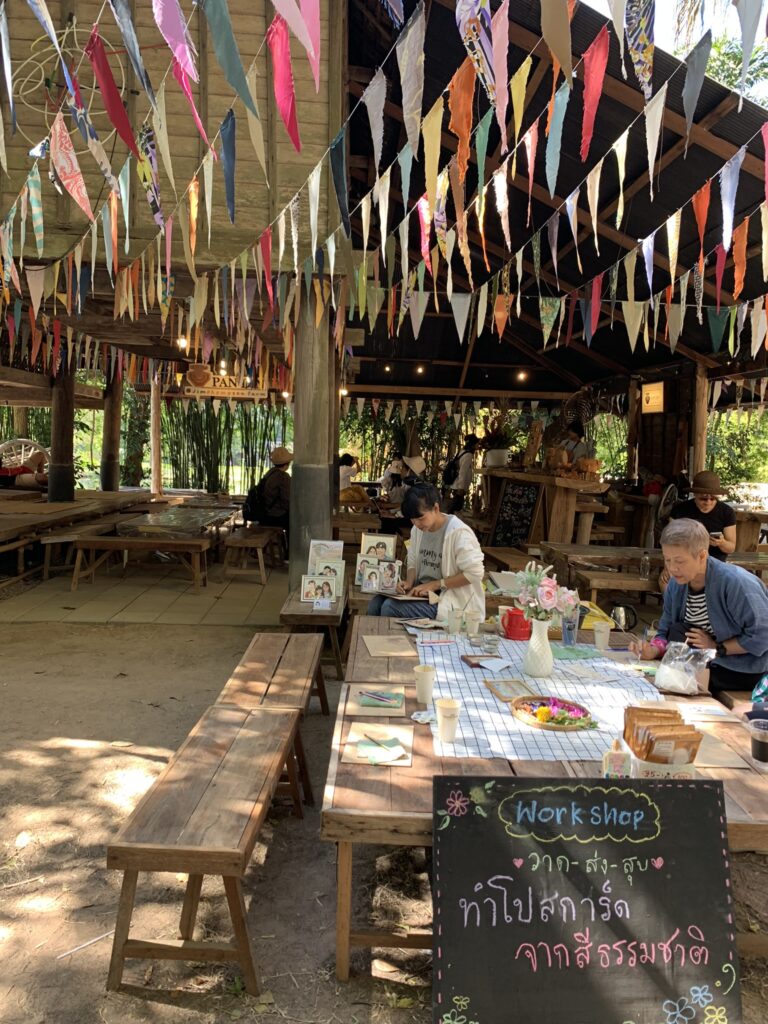
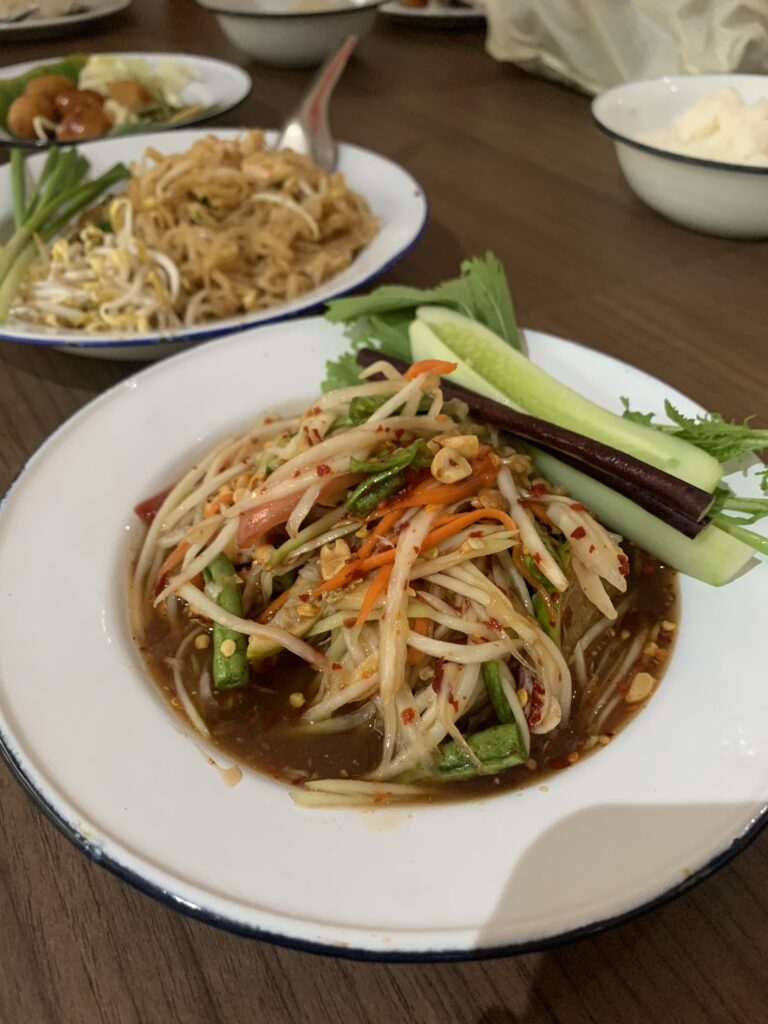
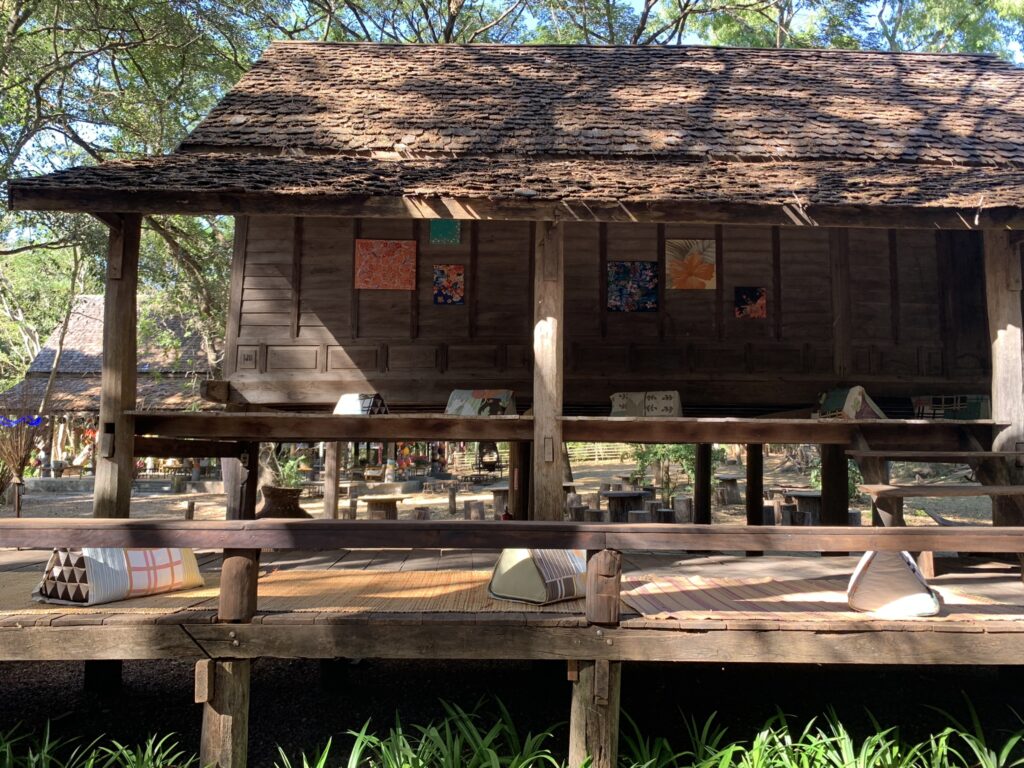
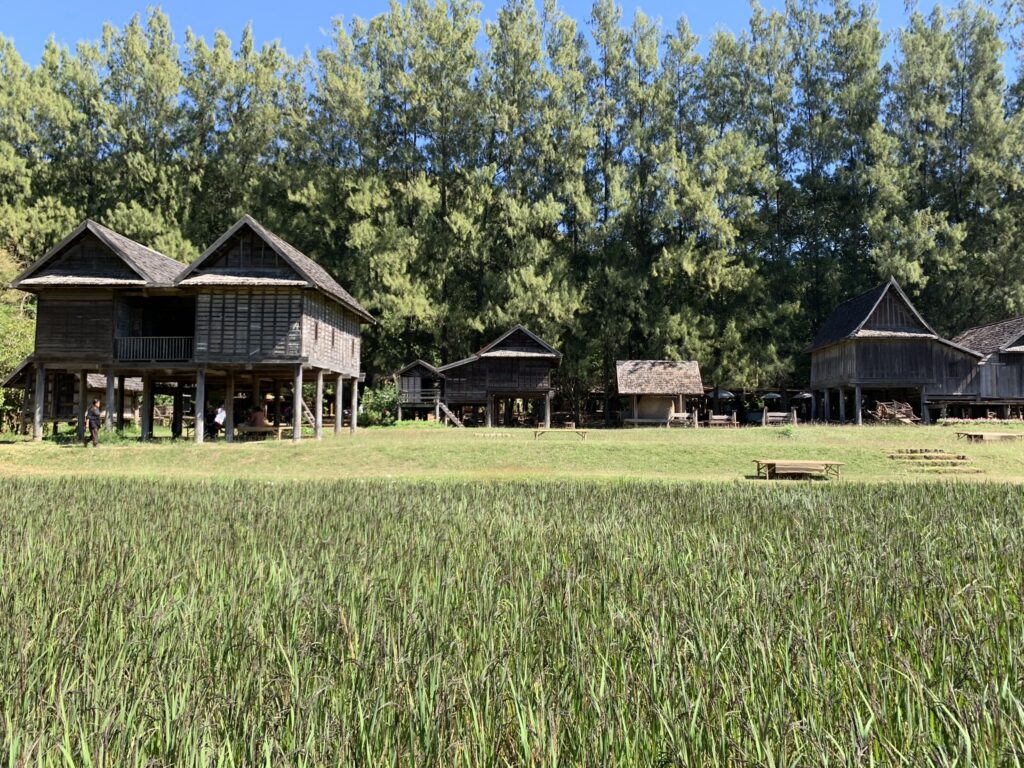
One of the highlights of the area is the Jim Thompson Farm, open to the public during a limited season (typically December–January). More than just a farm, it’s a full cultural immersion. Visitors can wander through colourful flower and rice fields, explore traditional Isaan architecture, learn about silk production, engage in hands-on agricultural experiences, enjoy local cuisine and shop organic produce from local farmers.
I was lucky—my school friend who works for Jim Thompson was at the farm on the day of our visit. She gave us a personal tour, making the experience even more special.
The farm’s emphasis on sustainability and community engagement makes it a must-visit for mindful travellers.
A Peaceful Retreat for the Soul
Pak Thong Chai might not be on most tourist itineraries—not even for Thais—but that’s exactly its charm. It offers a rare opportunity to experience authentic Thai culture, reconnect with nature, and support long-standing local traditions.
Getting There:
Pak Thong Chai is about a 4-hour drive from Bangkok and 30 minutes from Nakhon Ratchasima city (Korat). It’s best explored by car or with a local guide.
I visited as a day trip from Pak Chong – Khao Yai, where we were staying at my sister’s condo. From there, it was just over an hour’s drive.
Best Time to Visit:
December to February, when the weather is cool and the Jim Thompson Farm is open. That said, this region is peaceful and welcoming all year round.