Do you have any Thai friends? If you do, you would have noticed some social practice you might find weird or irrational. Thais are superstitious. Most of these beliefs are a blend of Buddhist philosophy, Hindu-Brahmin astrology, and ancient beliefs.
Understanding local superstitions doesn’t mean you have to adopt them yourself. It’s about recognising local practice, what influences decision makings and social interactions, and it prevents you from unintentionally offending or creating awkwardness.
The Colours
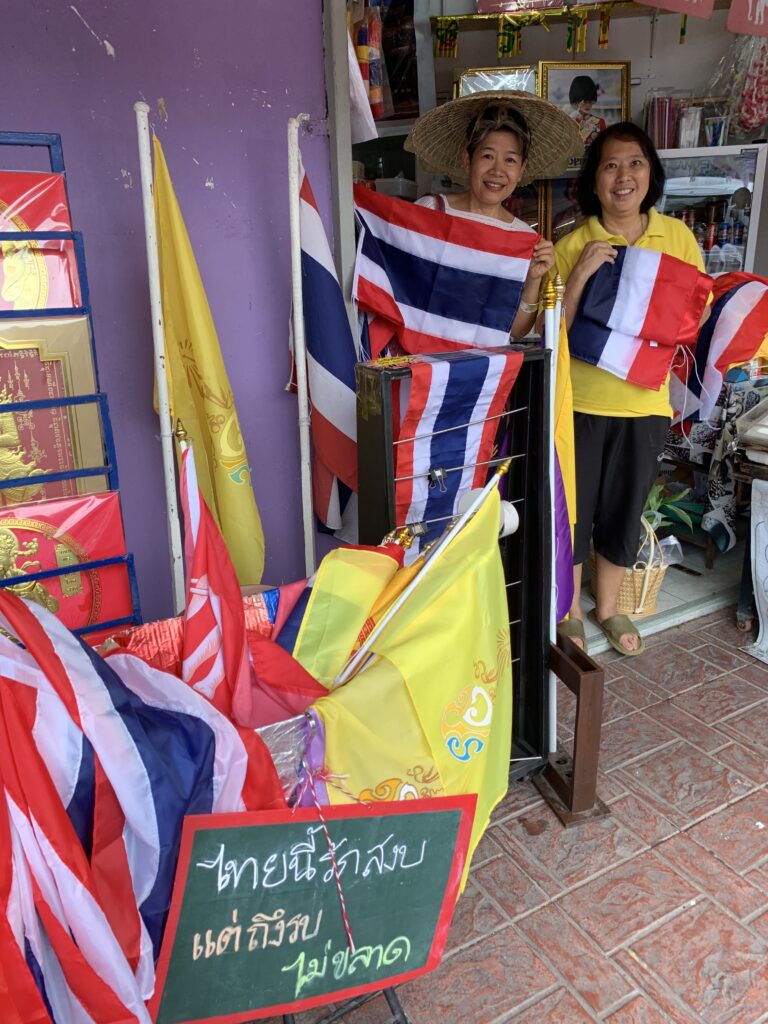
Do you know that in Thailand, each day of the week is associated with a specific colour based on astrological influences? Wearing the designated colour is believed to bring good luck.
- Sunday: Red (Surya)
- Monday: Yellow (King Bhumibol and King Rama X birthdays)
- Tuesday: Pink
- Wednesday: Green
- Thursday: Orange
- Friday: Blue
- Saturday: Purple
Important national days incorporate these colours to align public celebrations with traditional beliefs, such as on Thai Father’s Day (December 5), yellow predominates nationwide to honour the late King Bhumibol, including venue decorations and yellow clothing by participants. Similarly, Thai Mother’s Day (August 12) sees the country dressed in blue, the colour of Friday, to pay tribute to the late Queen Sirikit, born on Friday. These colour-themed observances extend to broadcasts and public gatherings, fostering national unity through shared cultural symbolism.
Another colour-related common belief is black should be avoided at any auspicious ceremonies, such as weddings and birthdays, because it is considered an inauspicious colour.
Spirits, Ghosts, and the Invisibles
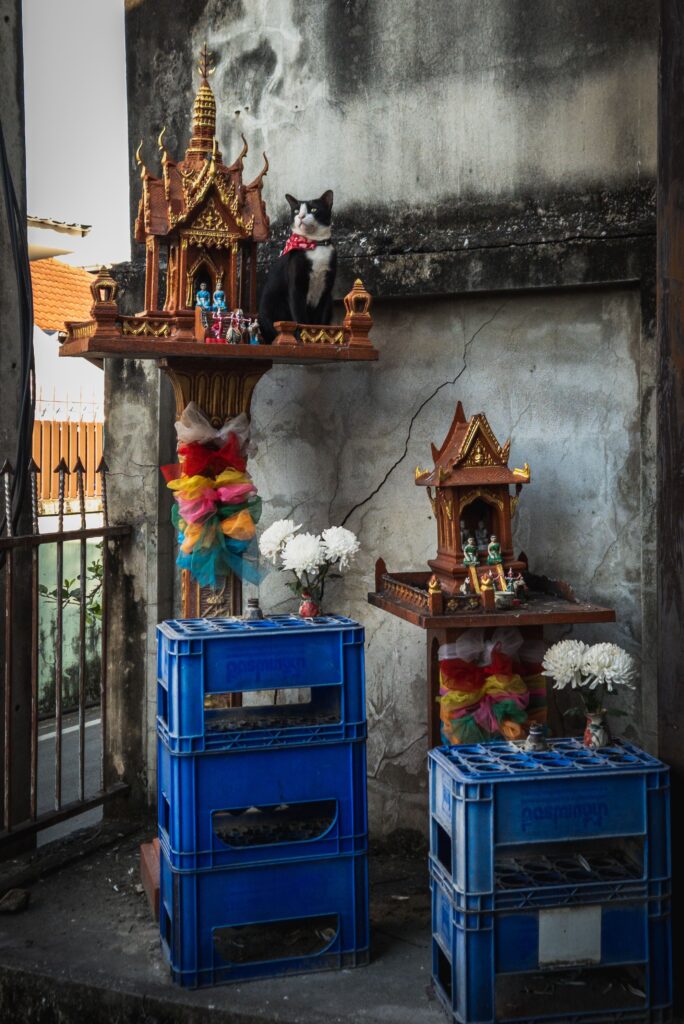
In Thailand, most homes and businesses maintain a spirit house. Most of them resemble mini temples, positioned at precise locations often determined by a Brahmin priest or ritual specialist, to house the land spirits displaced when the structure was built. The logic is impeccable: you’re building on land where spirits lived first. You need to offer them proper accommodation and regular respect, or they’ll make your life miserable through illness, bad luck, and business failure.
Offerings appear daily—rice, fruit, water, Thai desserts, flowers. Before important decisions or events, people ask for blessing and protection. I was told that this isn’t Buddhism and that spirit houses predate Buddhism by centuries.
Beyond the spirit houses, Thais believe in ghosts e.g. the violent death ghosts that haunt accident sites. This belief generates some daily behaviors such as whistling at night or knocking spoon on pot or pan while cooking attracts spirits hence should be avoided, pregnant women shouldn’t attend funerals because ghosts might possess the unborn child and dreaming of deceased relatives requires immediate merit-making ceremony. Another ghost-related superstition is that you should honk your horn when passing a shrine or a curve. Thais believe it’s like showing spirits some respect.
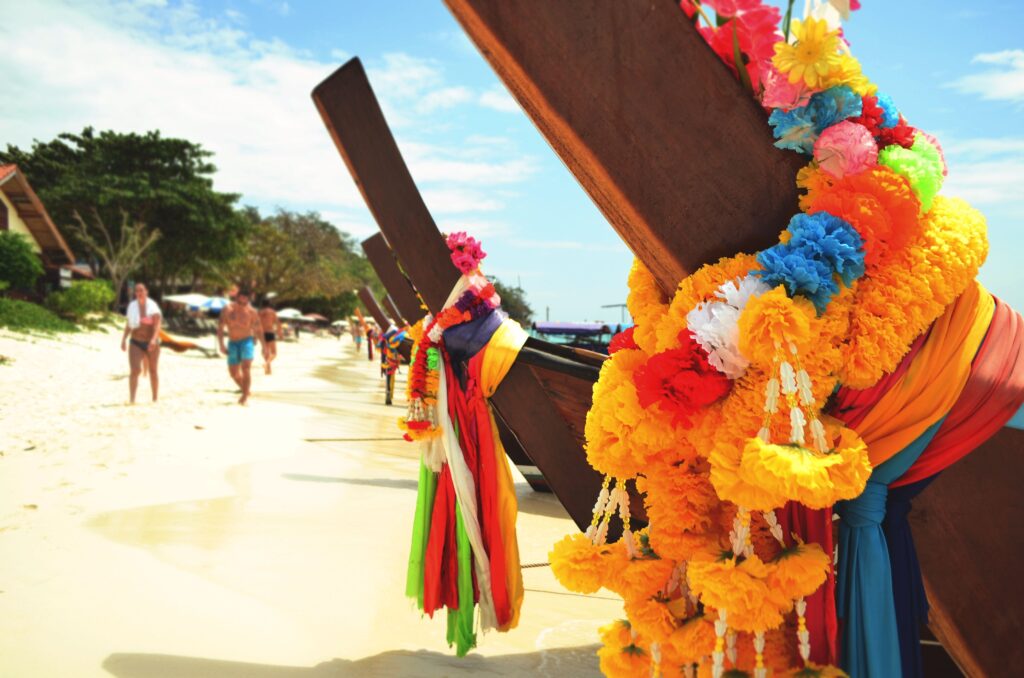
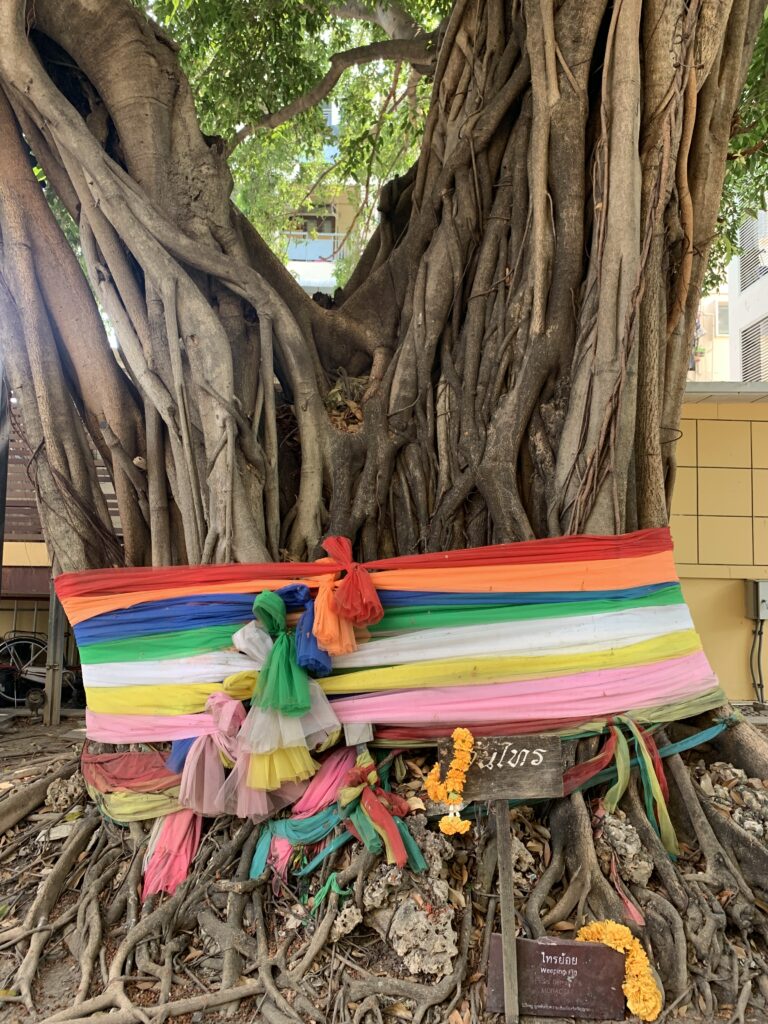
You will also see colourful robes on Thai boats, trucks and certain types of trees. The robes on the vehicles are to pay respect to Mae Yanang, a female spirit – the guardian spirit of travel. By paying respect to Mae Yanang, passengers will be assured a safe journey. Tying colourful robes around big trees is believed to invoke blessings from the gods or spirits living in the trees, bringing prosperity, happiness, and protection to the surrounding area.
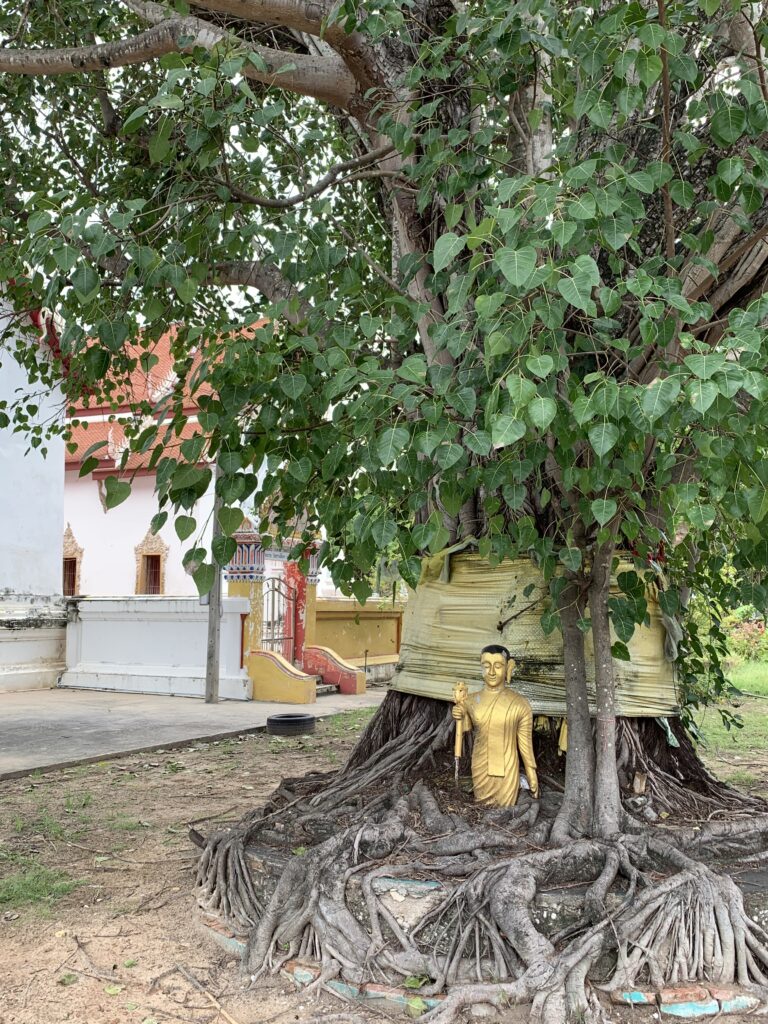
Superstitions in Thailand function to reduce anxiety, create shared meaning, maintain tradition, and provide frameworks for decision-making in an uncertain world. It has nothing to do with how well-educated they are. It’s purely personal. I am Thai, living in Australia. After I bought a house, I invited Thai monks to conduct a monk blessing ceremony. I would go to a Thai temple to make merit to my relatives who have passed away or to seek blessings before my mum’s surgery. Doing so reduces my worries and anxiety.
Other common taboos are “Don’t have a haircut or surgery on Wednesdays.”, “Women shouldn’t sing while cooking or she will get an old husband.”, “Cutting nails at night brings bad luck.”
In short, you don’t have to believe or follow any of these, but you should respect them. Also avoid making fun of them in public.