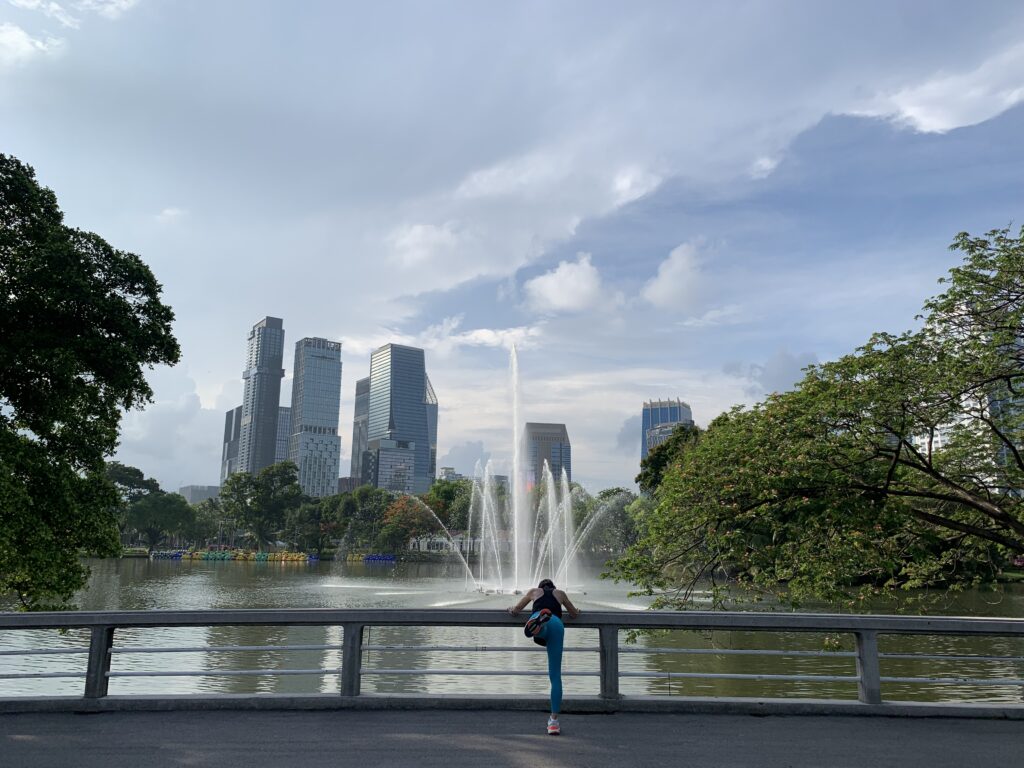
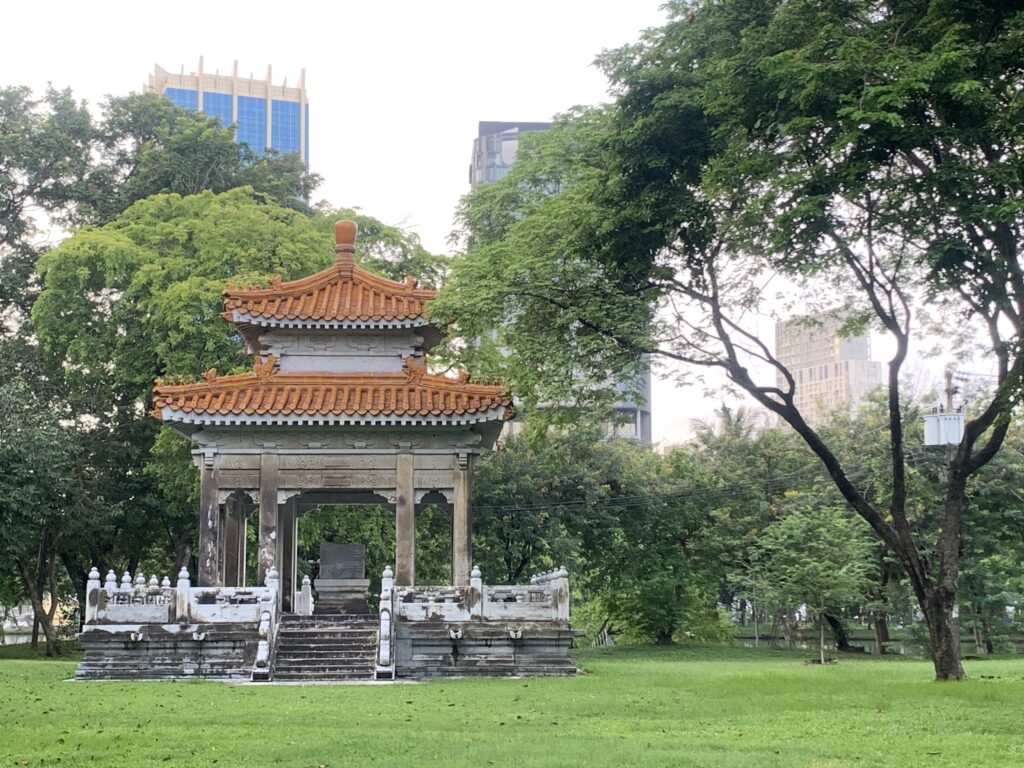
Lumpini Park is Bangkok’s first public park and one of its most important urban landmarks, but its significance goes far beyond being a green space for sports and recreation. The park has celebrated its 100th anniversary in 2025.
Historical and cultural roots
Founded in the early 1920s on royal land donated by King Rama VI, Lumpini was envisioned as a modern, accessible public space for citizens of all ages. Its name comes from the Buddha’s birthplace in Nepal.
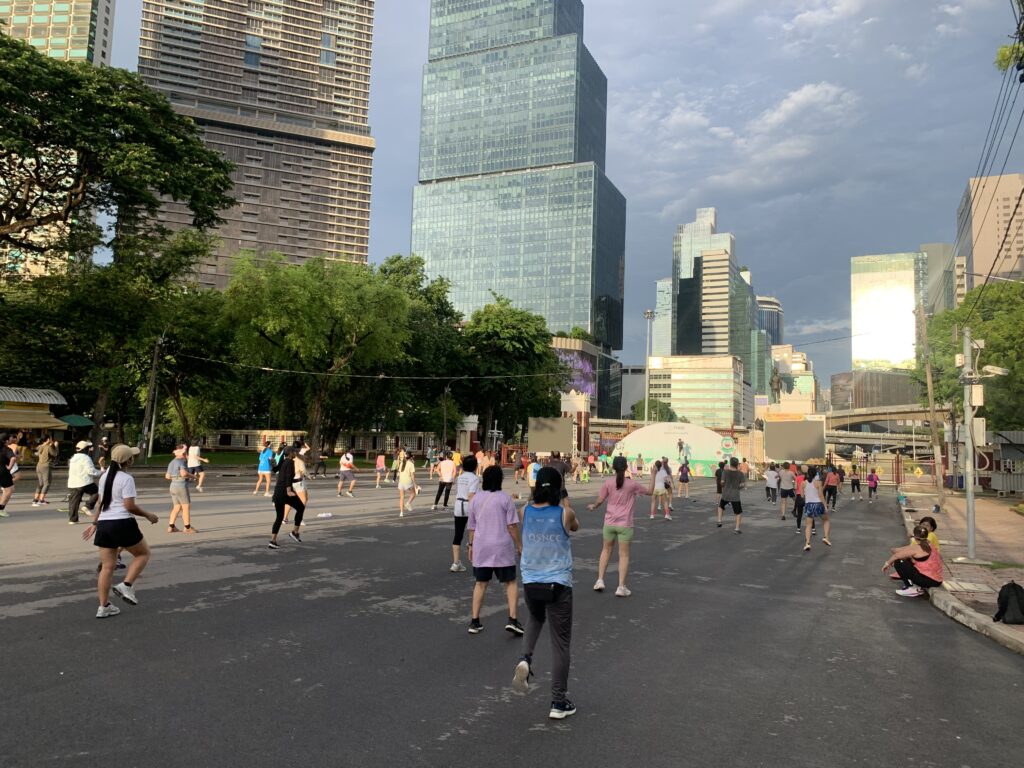
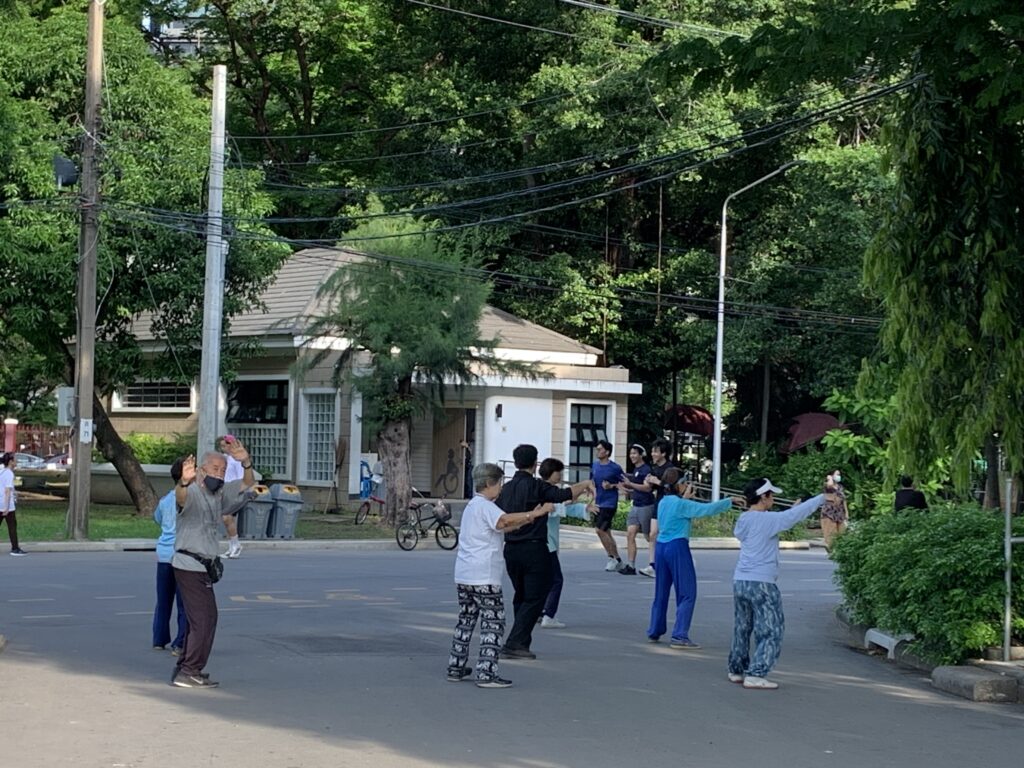
There are free morning and evening aerobic exercises at Lumpini Park near the main entrance close to the statue of King Rama VI. The morning ones are simpler, while the evening ones are more advance. I was told this Tai Chi group has been here for decades.
What to do at Lumpini Park
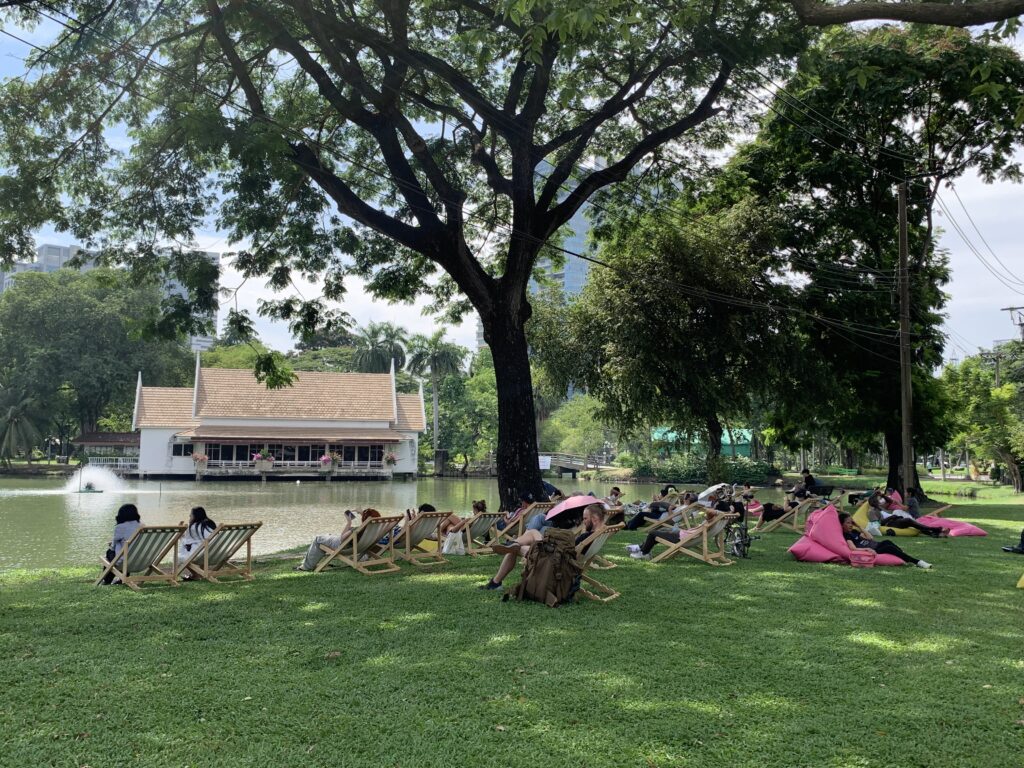
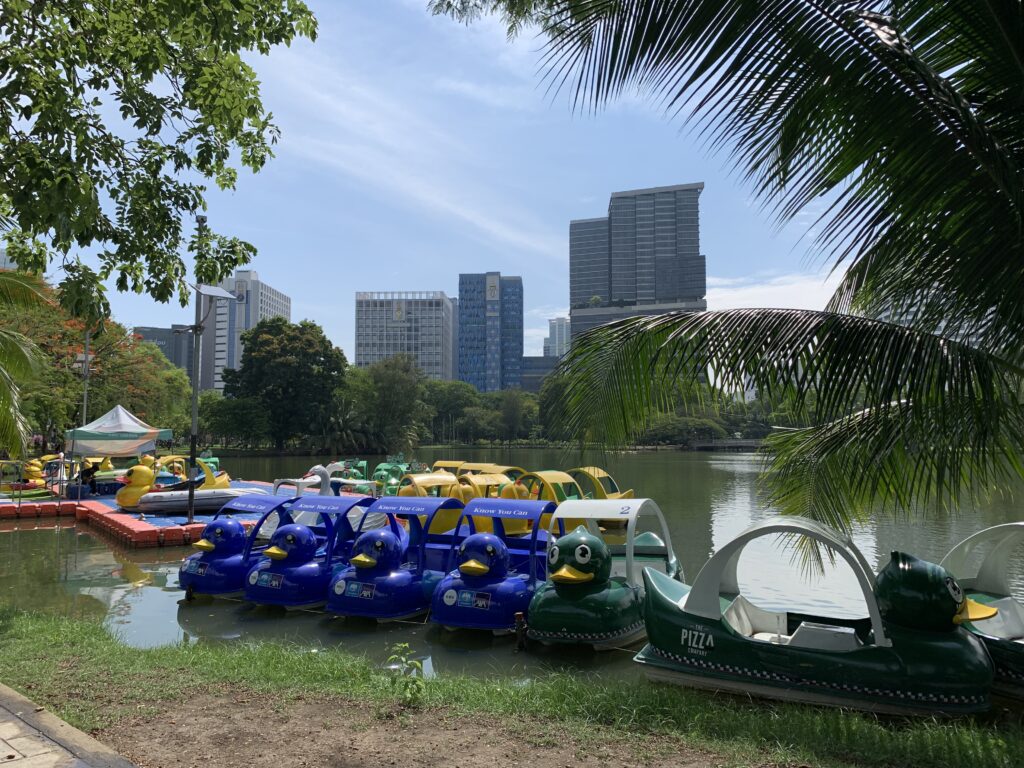
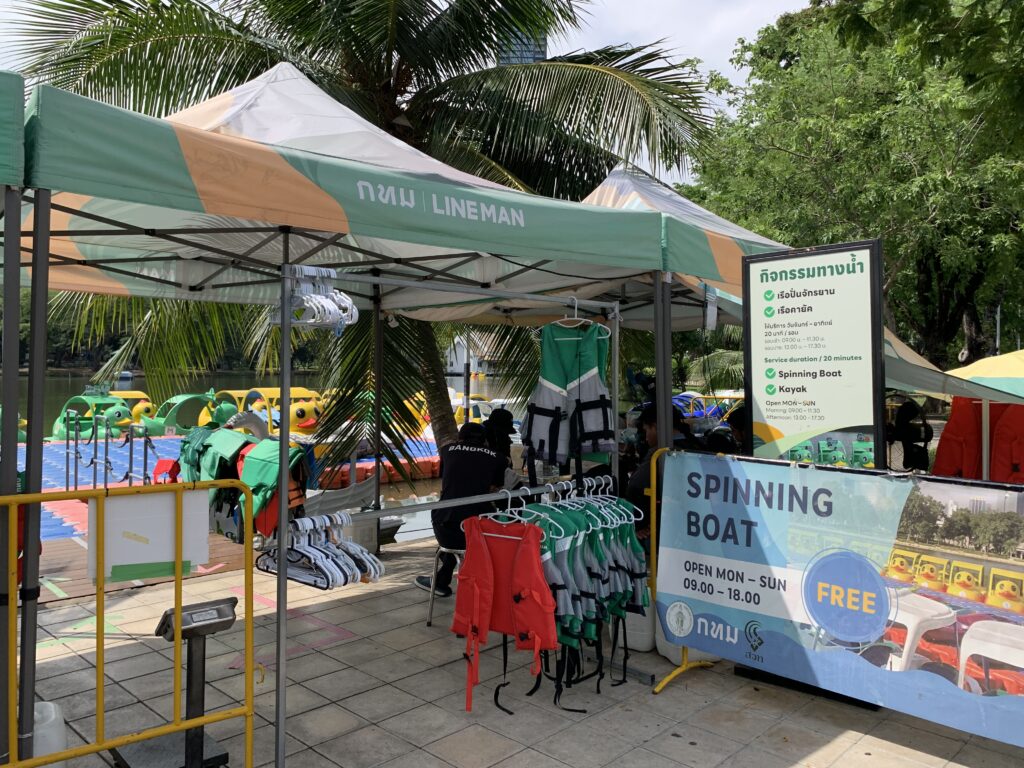
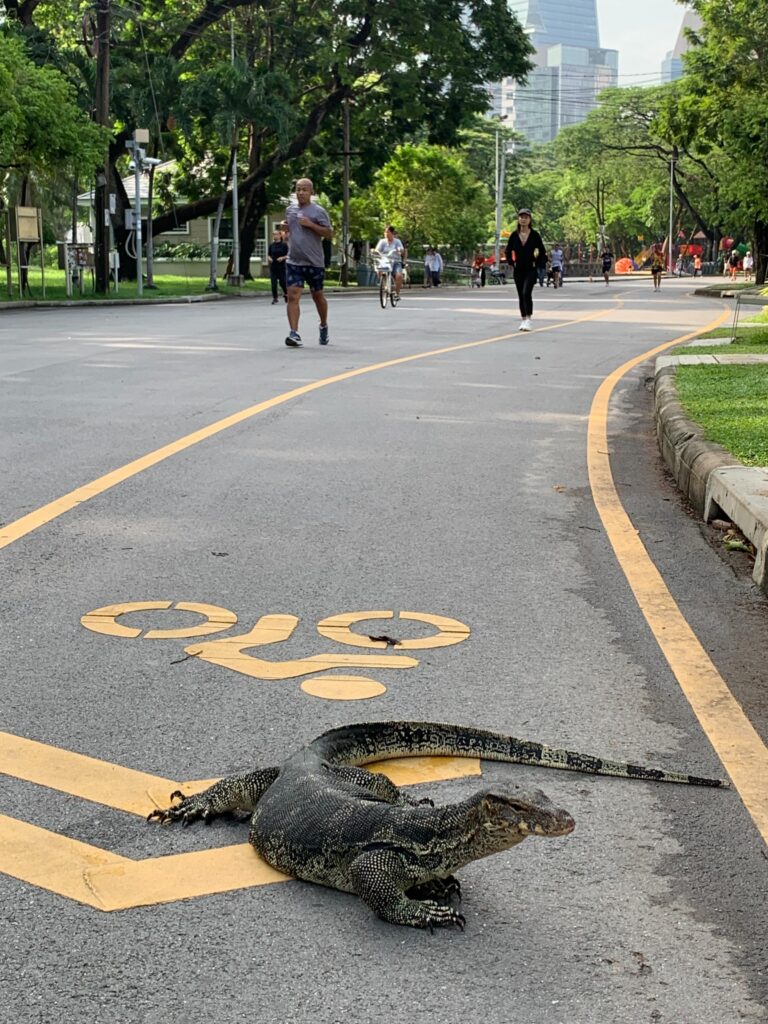
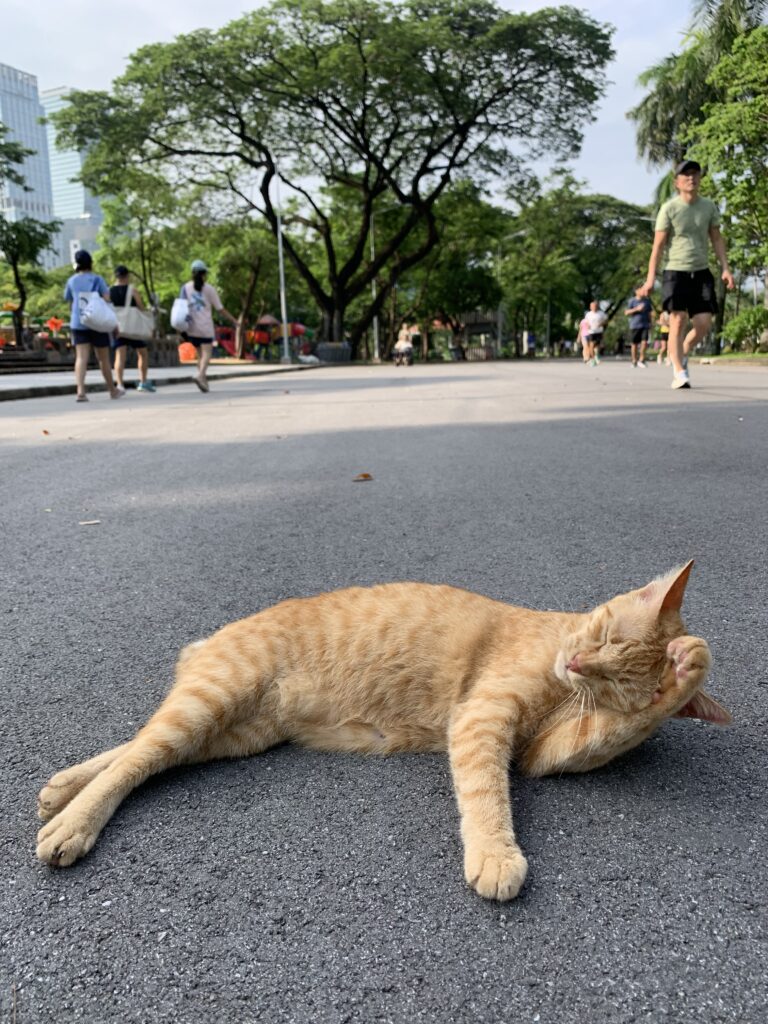
Surrounded by skyscrapers of Silom and Chidlom and busy Ratchadamri, Witthayu (formerly called Wireless) and Rama IV roads, the park today offers rare open greenery in one of Asia’s most densely built and populated capitals, serving as a “green lung” for residents and visitors. It has been a place for exercises (running, yoga, aerobic dance, Tai Chi), picnics, meditation, social gatherings, concerts and festivals. Some of these activities are free, some are with small fees. There are free exercise equipment, playgrounds, toilets and lockers around the park. It’s also home to hundreds of iconic water lizards, cats, and duck‑ and swan-shaped spinning boats. These boats are free of charge to use and life vests are provided.
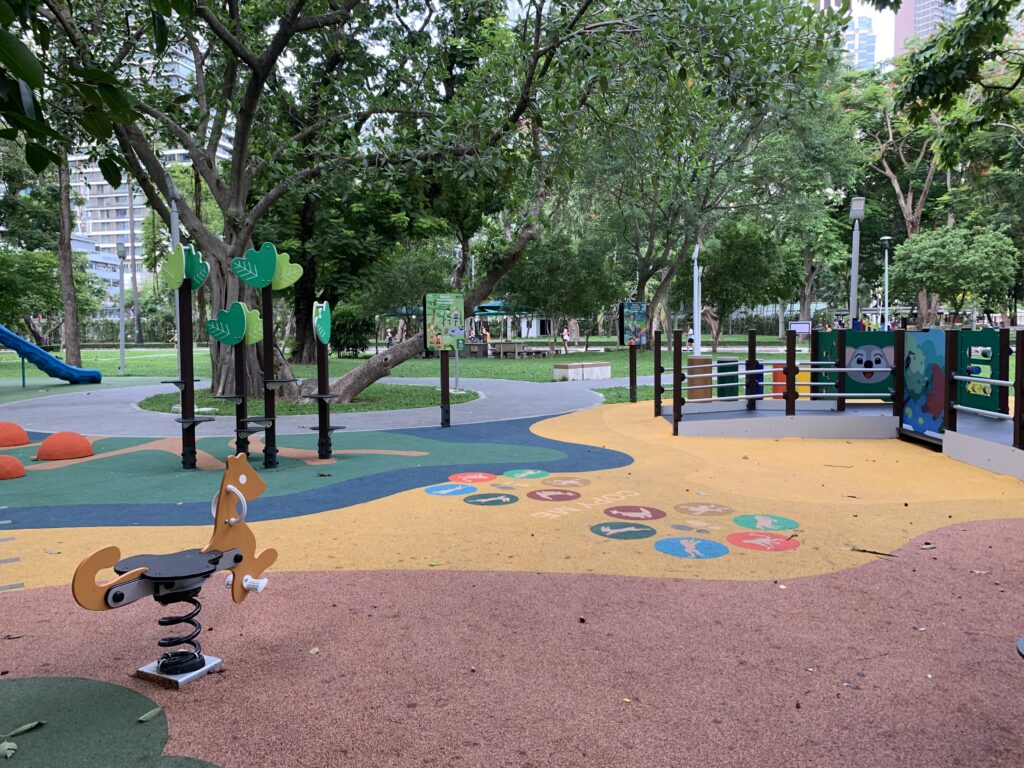
Visitors to Lumpini Park can use duck-shaped spinning boats free of charge. Life vests are also provided. Water lizards can be seen roaming around Lumpini Park during the day. This one seems to take the wrong lane …I was told this orange cat is one of the celebrity cats of Lumpini Park.An Australian-themed playground sponsored by the Australian Embassy Bangkok across the road from Lumpini Park
How to get to Lumpini Park
The park has some parking spaces with small parking fees, but the road traffics around the park are usually heavy, so I won’t suggest you come by car, neither taxi. Taking MRT (MRT stands for Mass Rapid Transit.) metro is the most convenient way to get here. There are two MRT stations right next to the park: Silom and Lumpini Stations. You can also take BTS(BTS stands for Bangkok Mass Transit System.) sky train and get off at Sala Daeng BTS Station.
The park opens daily from 4.30 – 22.00.
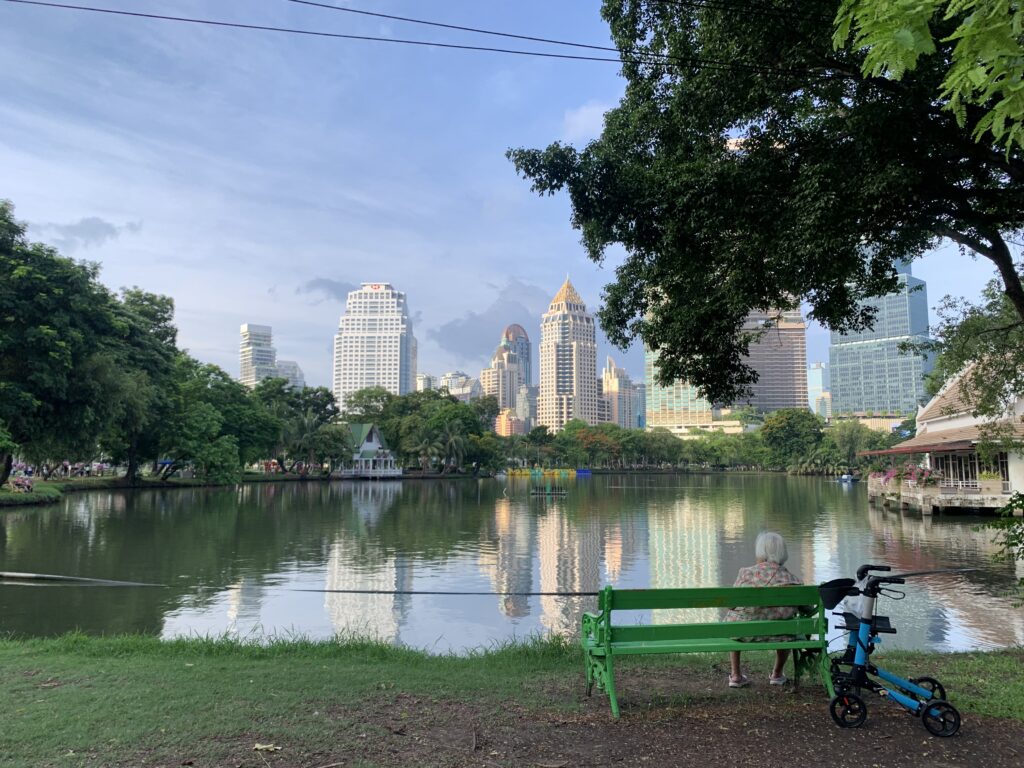
An elderly lady having a rest by the pond at Lumpini Park
Useful things to know
There’s a decent sized food hawker at the corner of Ratchadamri and Sarasin roads. I would usually go there after my morning walks and yoga classes. Fresh fruits are cheap and all the ready to eat food I’ve tried were delicious, especially the BBQ pork skewers at the far end near Sarasin Road.
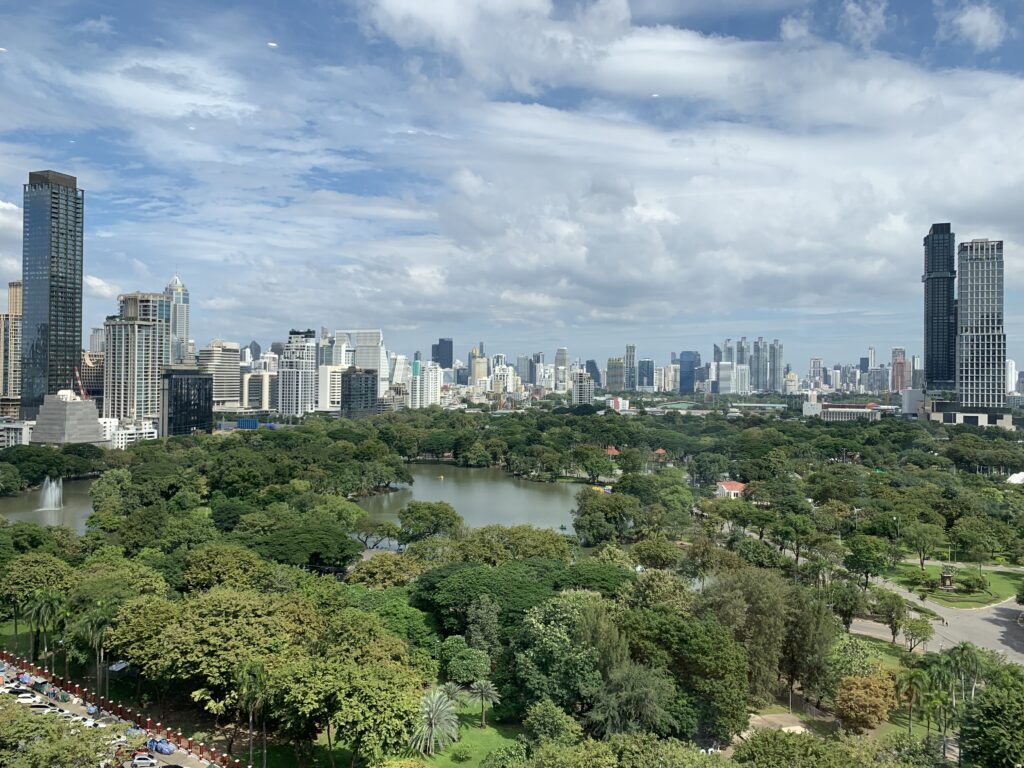
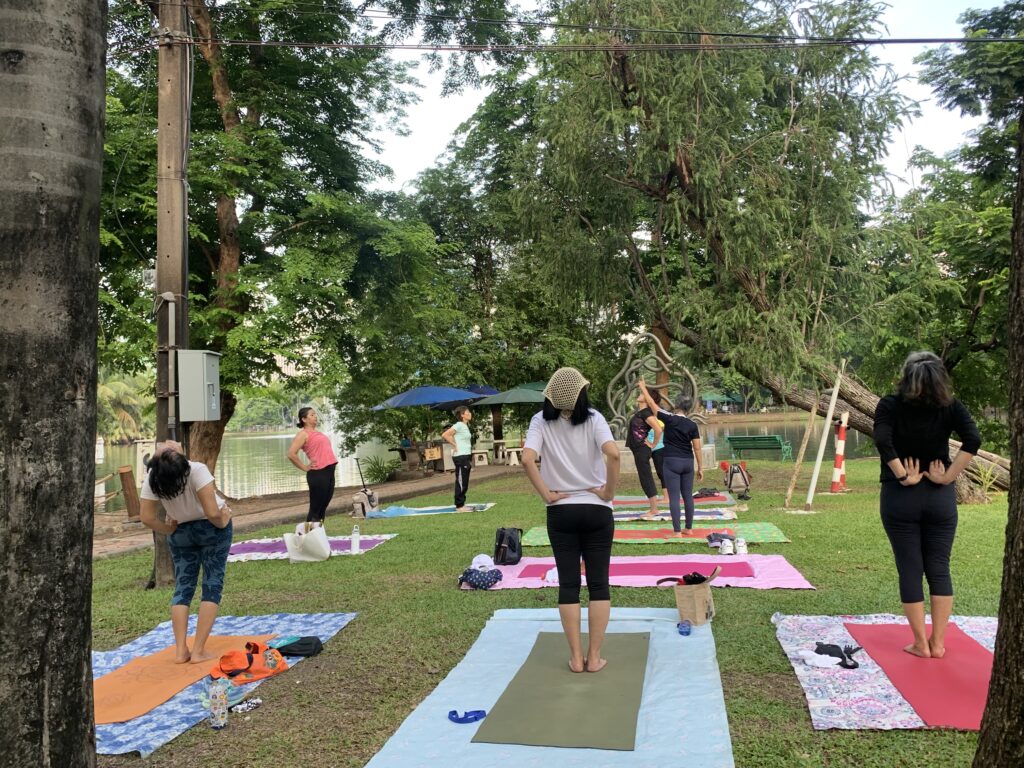
A view of Lumpini Park taken from Chulalongkorn Hospital across the roadA morning yoga class I joined while I was in Bangkok in May 2026. You can find them next to the water lizard sculpture in the morning, 7.00-8.00am. If you would like to join them, simply ask and you can join with a small fee.
Alcohol drinking, smoking, gambling and drone flying are not allowed inside the park.
Bangkok is best explored on foot – especially when you’re wandering through its old quarters, historic temples, hidden alleyways, and bustling street food scenes. While tuk-tuks and boats have their charm, there’s something special about walking at your own pace, soaking in the atmosphere, and stumbling upon unexpected gems. I’ve put together a few self-guided walking routes that take you through some of my favourite neighbourhoods. Whether you’re into temples, street eats, old architecture, or riverside vibes, there’s a walk here for you. All routes are flexible – feel free to linger, detour, or come back another day for more.
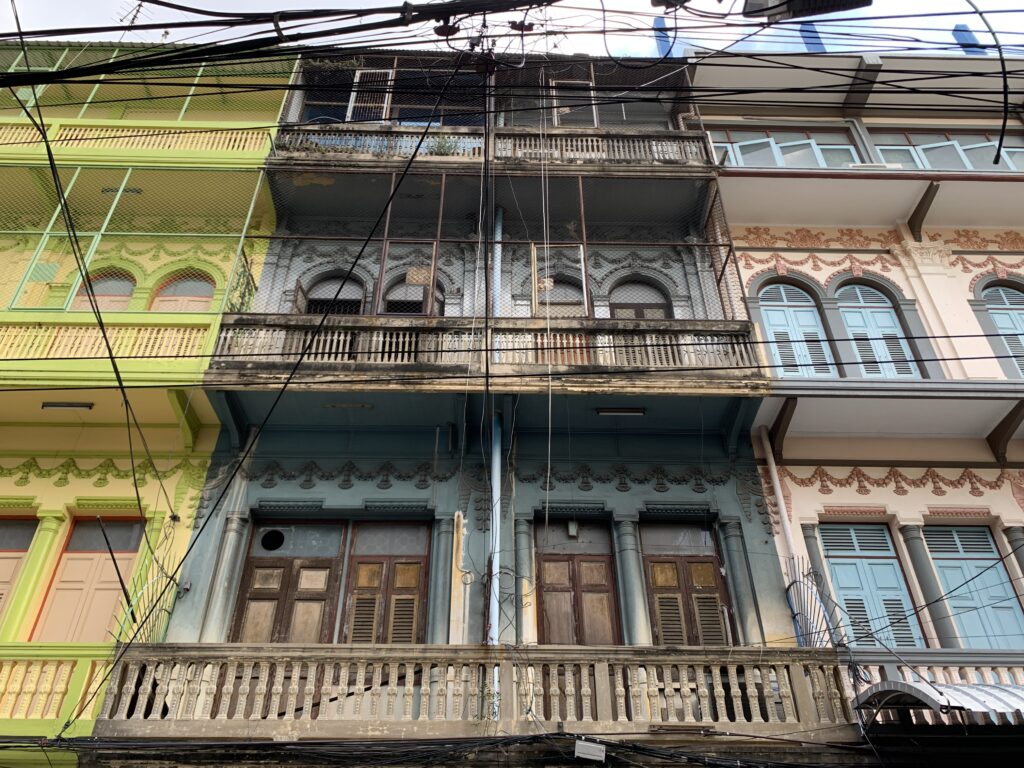
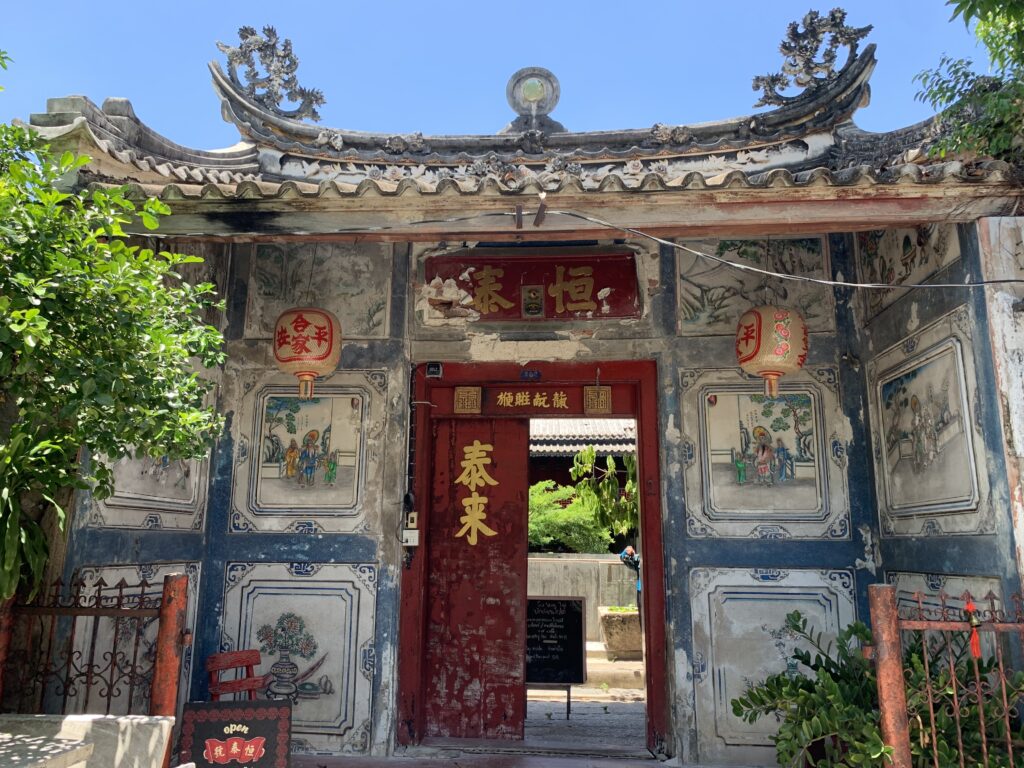
Song Wat is known for its preserved shophouses in Sino-Portugese architecture. Make sure to look up as the facades of some buildings are very beautiful.
Yaowarat – Song Wat – Talad Noi Start your walk at Wat Mangkon, one of the most important Chinese temples in Bangkok. From there, cross Charoenkrung Road and follow Mangkon Road towards Yaowarat Road. Along the way, you’ll pass some of the city’s most bustling and character-filled laneways. Yaowarat Road itself truly comes alive after dark, so you might want to return later for a night-time food adventure. For now, cross the road and head to Song Wat Road, where old-world architecture, Chinese–Thai street food, cosy cafes, and bursts of street art await. Once you’re on Song Wat, make sure to try some food and spend some time exploring century-old buildings that blend European and Chinese architectural designs. I personally like beef noodle at Rong Klan Nuea and bao at Gu Long Bao, but I heard that braised goose at Urai and Thai food at E-Ga are also nice.
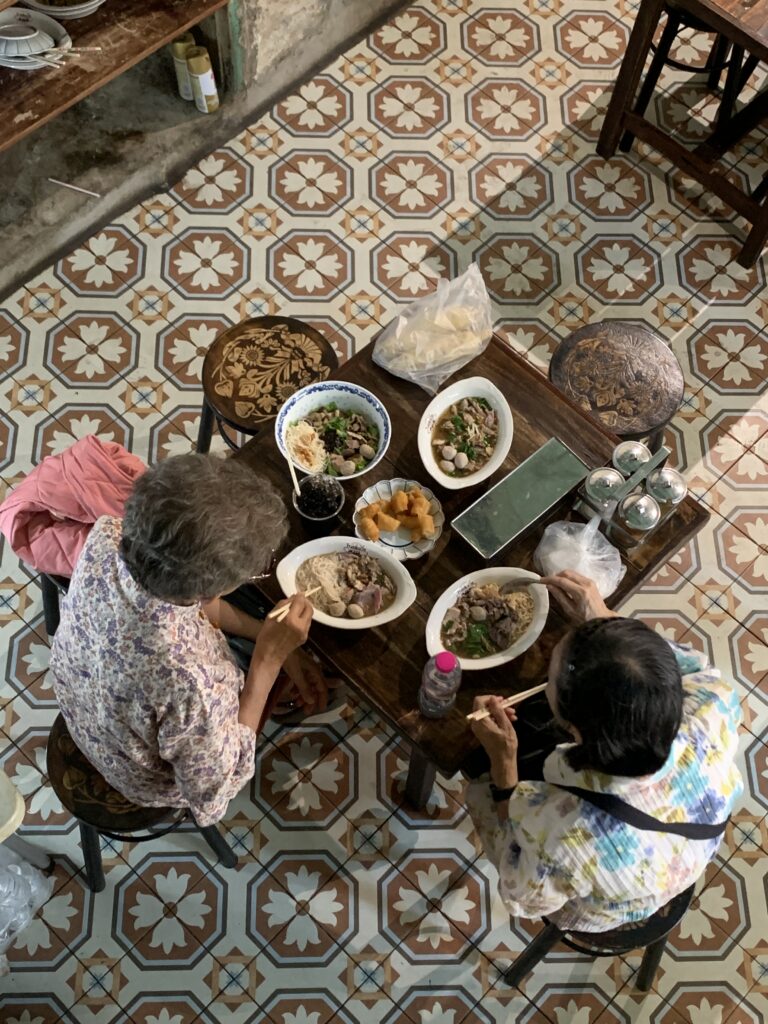
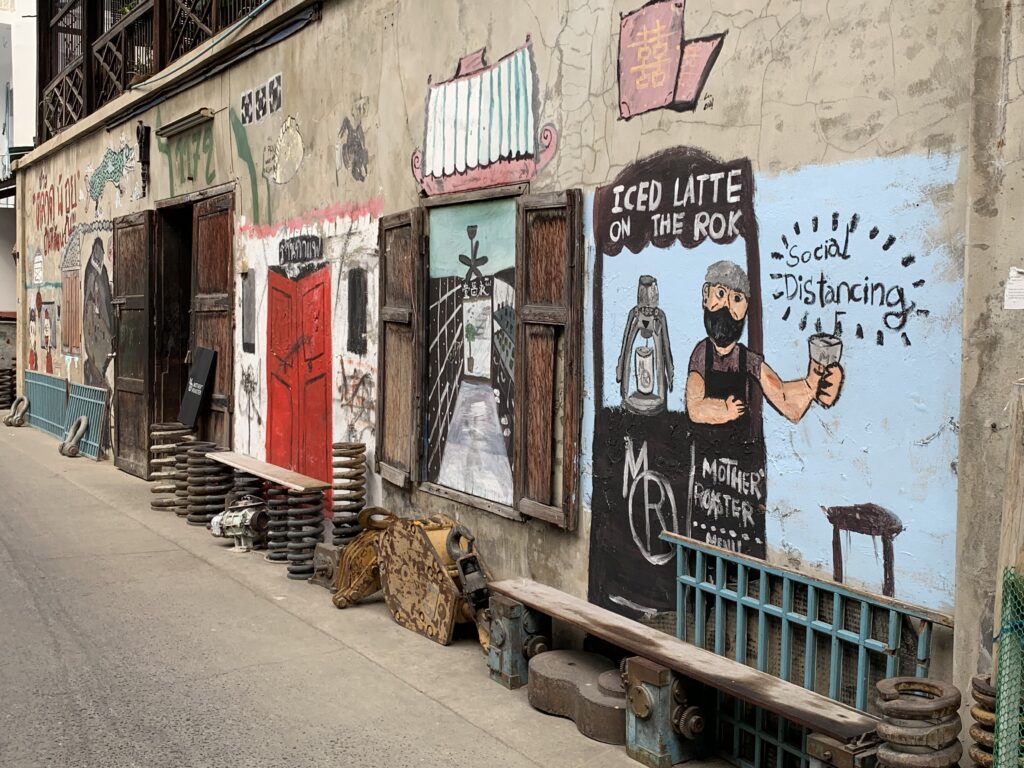
My mum and her friend having beef noodles at Rong Klan Nuea on Song Wat Road.A 200-year-old Chinese courtyard mansion in Talad Noi is now home to scuba diving school.Street art in front of a cafe in Talad Noi
Next, continue walking with the river on your right-hand side, towards Talad Noi, another riverside neighbourhood full of charm. You’ll find more quirky cafes and street food vendors on trolleys. I like iced coffee at Mother Roaster and cakes at Hong Sieng Kong. If you are a tea person, I heard Baan Chim Cha is really good and for a chocolate person, 32Bar X is a hidden gem.
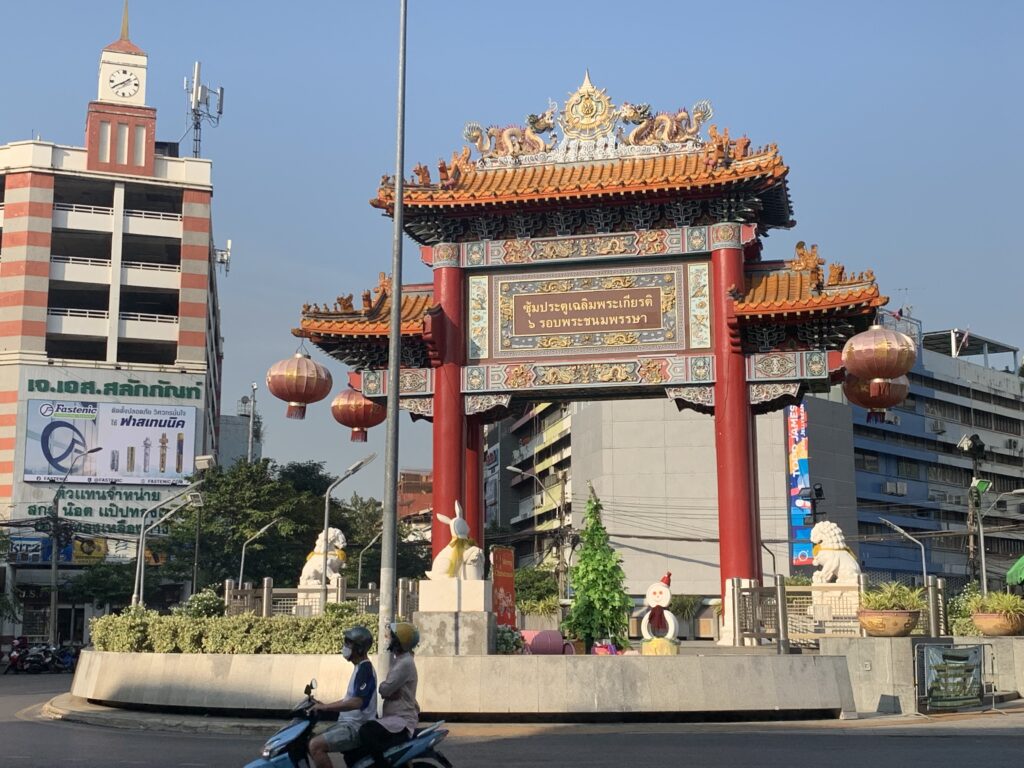
After this, you have two options – either walk towards River City Bangkok to explore antique shops and galleries or walk towards China Town Gate and end your walk at Wat Trai Mit, another important temple in Bangkok.
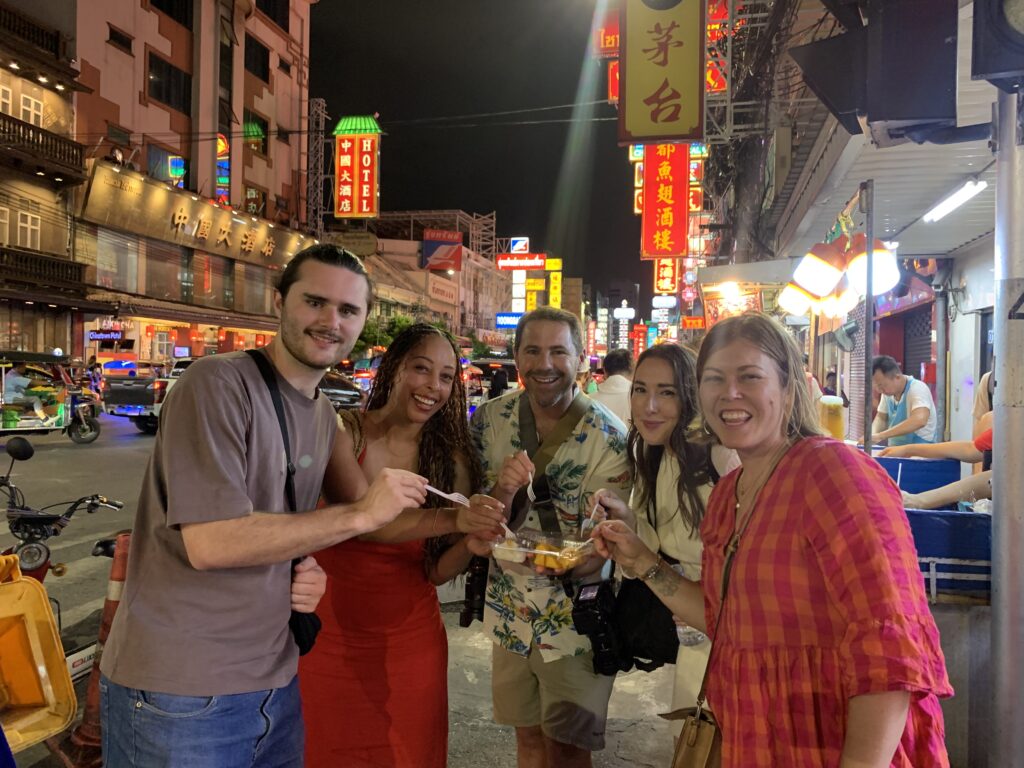
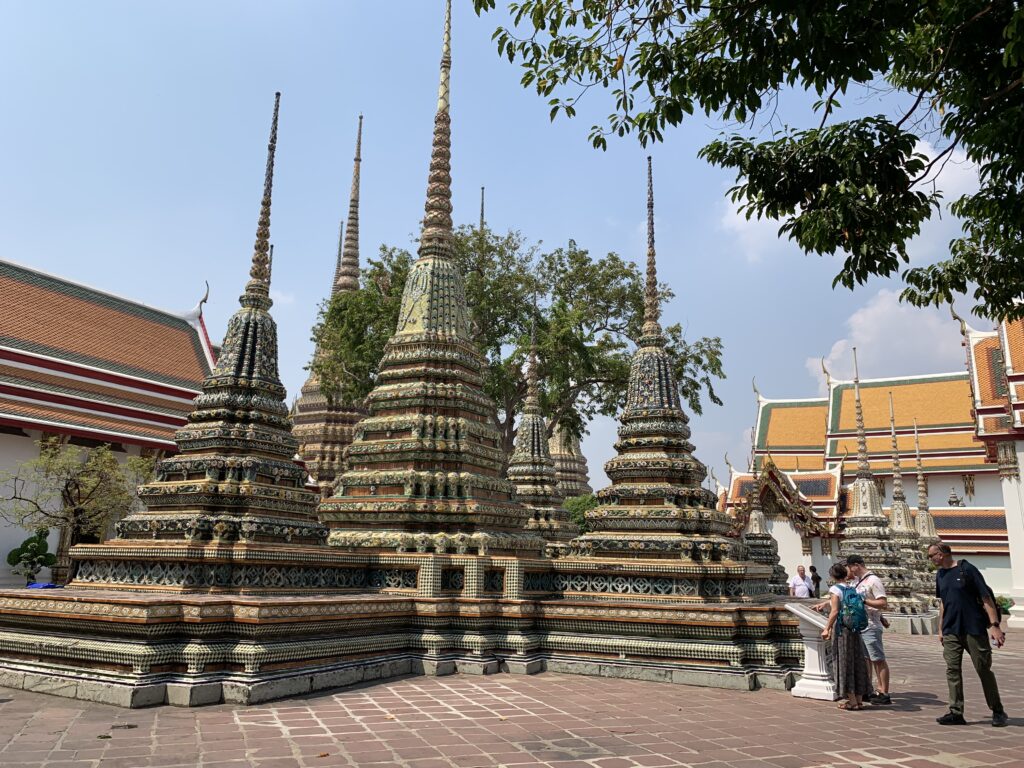
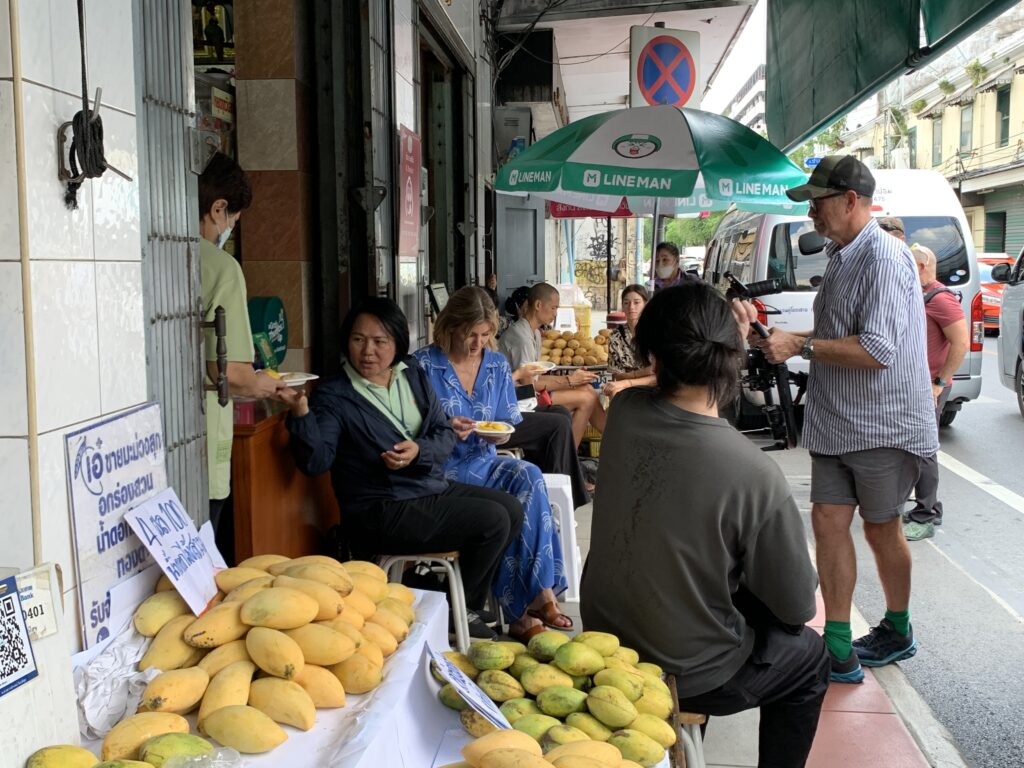
China Town GateWat Trai MitMy guests enjoying mango sticky rice in YaowaratWhen visiting Wat Pho, make sure to wander around the temple ground as there are a lot more to see than the huge reclining Buddha.
The Grand Palace – Wat Pho – Museum Siam – Flower Market No trip to Bangkok is complete without visiting The Grand Palace and Wat Pho – they’re showstoppers that never get old, even for repeat visitors. I recommend arriving early to beat the crowds and enjoy the more peaceful atmosphere.
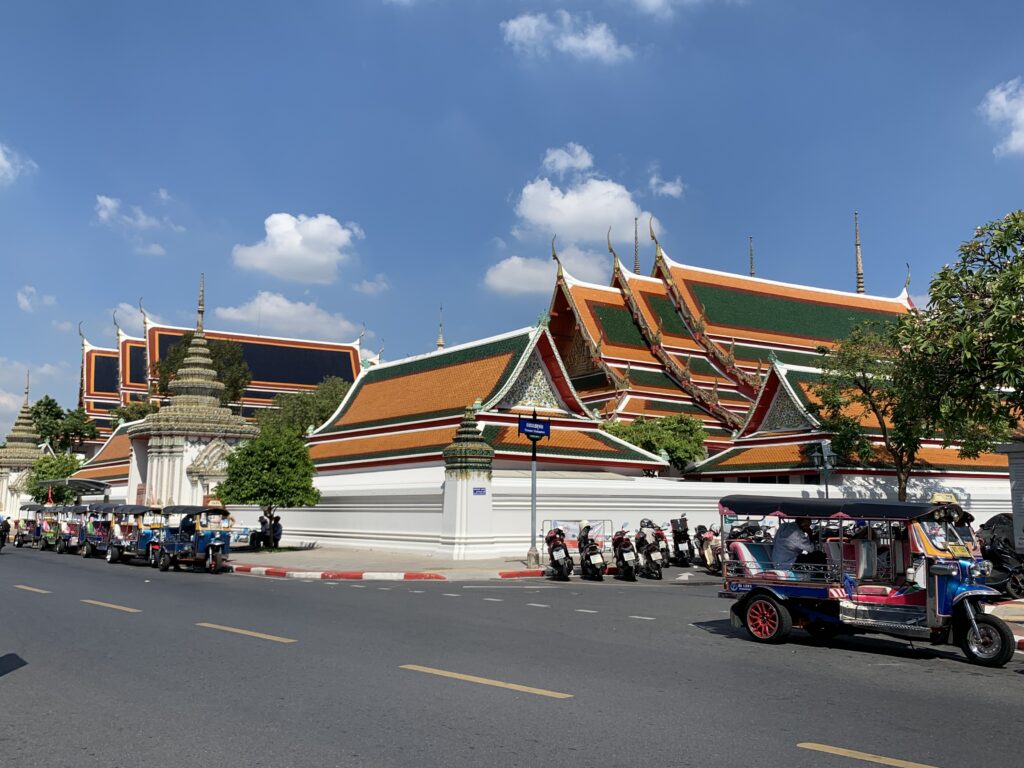
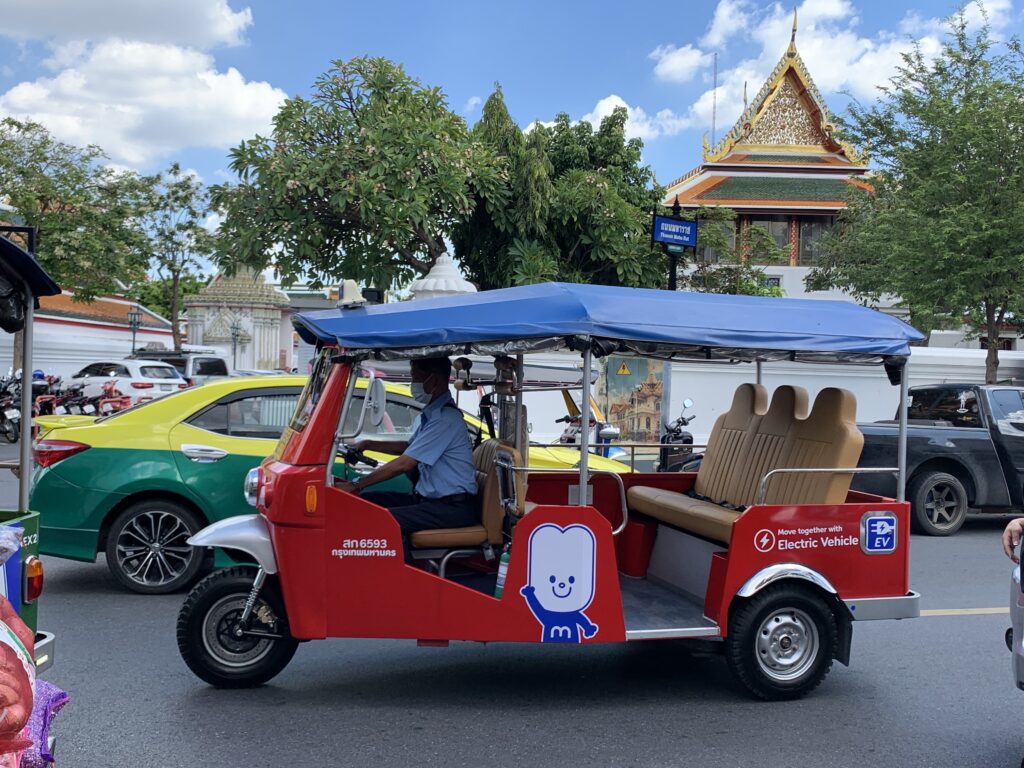
Some of the tuk tuk drivers around Wat Pho and the Grand Palace will try to rip you off. Be sure to bargain, as they are often inflated the prices for tourists.MuvMi e tuk tuk
Optional Stop – Queen Sirikit Museum of Textiles If you have time after visiting the Grand Palace, I highly recommend a stop at the Queen Sirikit Museum of Textiles, located within the palace grounds. This beautifully curated museum showcases the elegant garments worn by Her Majesty Queen Sirikit and the vibrant, intricate costumes used in traditional Khon dance performances. It offers a fascinating glimpse into Thai craftsmanship and royal heritage. Best of all, entry is included with your Grand Palace ticket—so don’t miss it!
After appreciating the beautiful ground and the stunning beauty of the huge reclining Buddha of Wat Pho, stroll along Maharat Road, where you’ll find plenty of local cafes and tempting street eats. Take a quick detour to the riverside for a view of Wat Arun across the river.
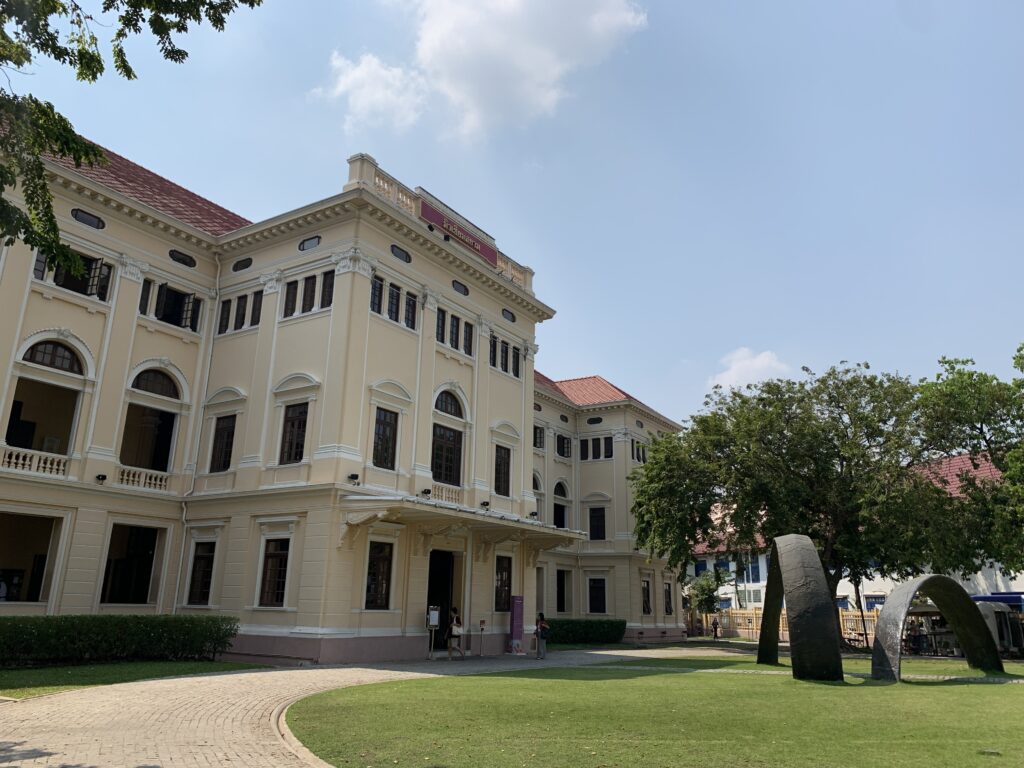
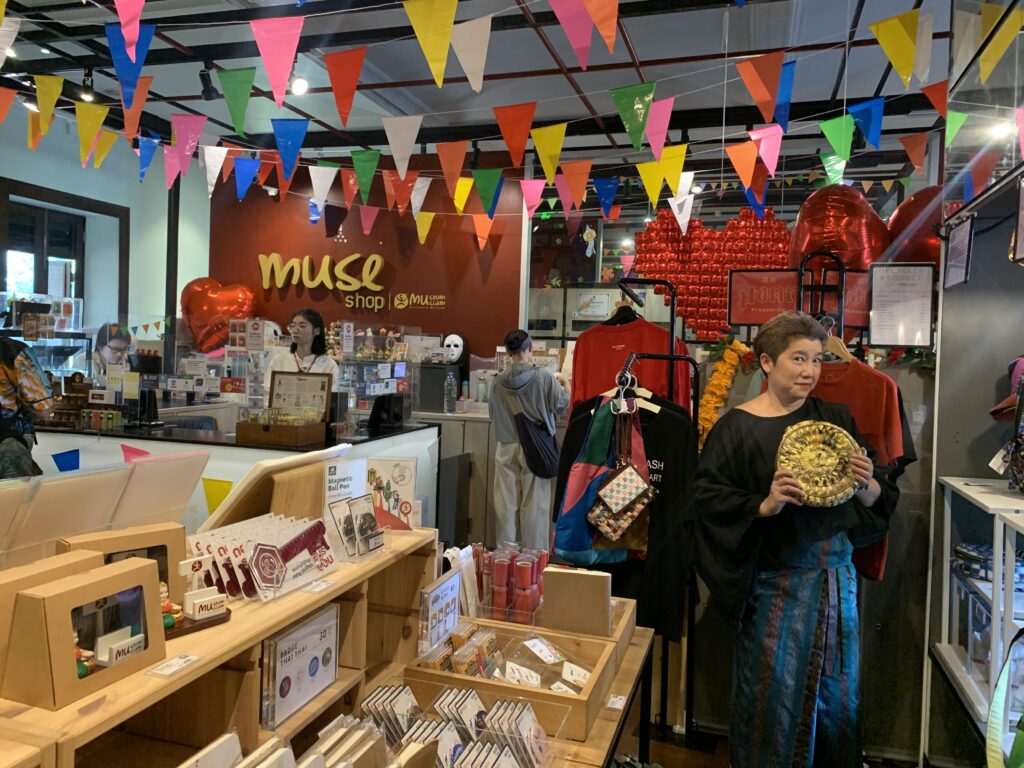
Museum SiamThe Muse Shop at Museum Siam
Continue your walk to Museum Siam, an engaging and interactive museum that brings Thailand’s history to life in a fun and modern way. Don’t forget to check out the museum shop as they have very well made souvenirs. End your walk at the vibrant Flower Market (Pak Khlong Talad)—a sensory delight filled with colours, scents, and local life.
Tips: Around major tourist attractions in particular the Grand Palace and Wat Pho, some of the tuk tuk drivers will try to rip you off. Be sure to bargain, as they are often inflated the prices for tourists.Otherwise, try MuvMi, an e-tuk tuk you can order through the app.
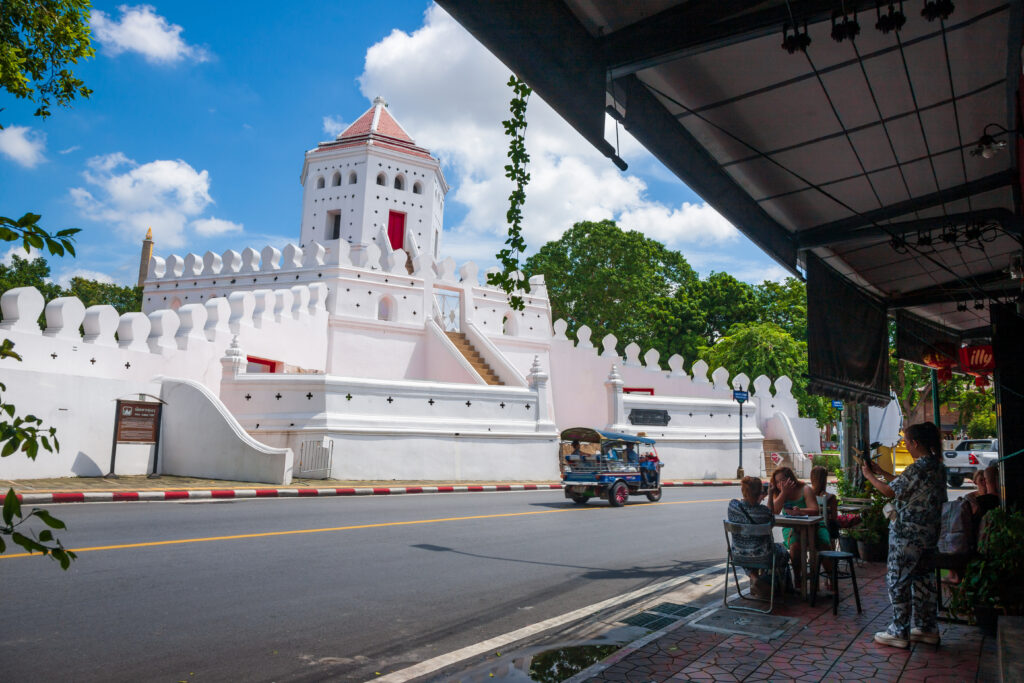
Wat Bowon – Bang Lamphu – Phra Sumen Fort Start at Wat Bowonniwet, one of the most revered temples among Thai Buddhists, yet still unknown to most tourists. Right across the road is Bang Lamphu, a lively old neighbourhood perfect for sampling Thai street food. The famous Khao San Road is right around the corner, but there’s not much to do there during the day. From there, make your way to the riverside to discover Phra Sumen Fort, one of Bangkok’s historic forts. It’s a peaceful spot to unwind, especially at the small park by the river.
Phra Sumen Fort (Credit Photo – Tourism Authority of Thailand)Wat Bowon (Credit Photo – Tourism Authority of Thailand)
Praeng Phuthon – Wat Suthat – Giant Swing – Dinso Road – Wat Ratchanadda – The Golden Mount
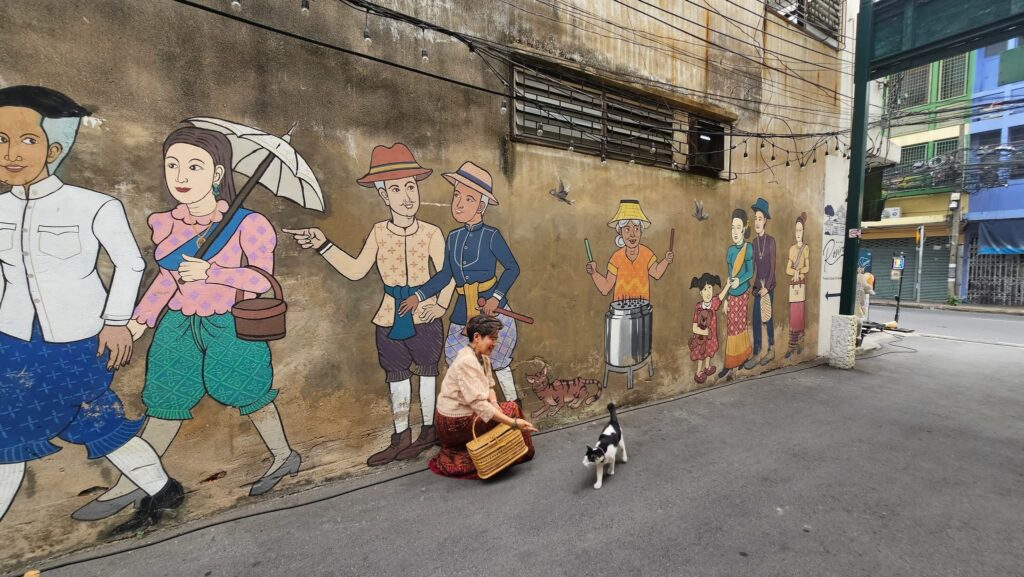
Lovely street art along Tanao Road
This route is a feast for both your eyes and stomach. Begin at Praeng Phuthon, a charming area known for its vintage shophouses and food stalls. Make sure to try coconut ice cream at Nattaporn and mango sticky rice at K Panich on Tanao Road. Walk towards Wat Suthat and the iconic Giant Swing, soaking in the classic architecture.
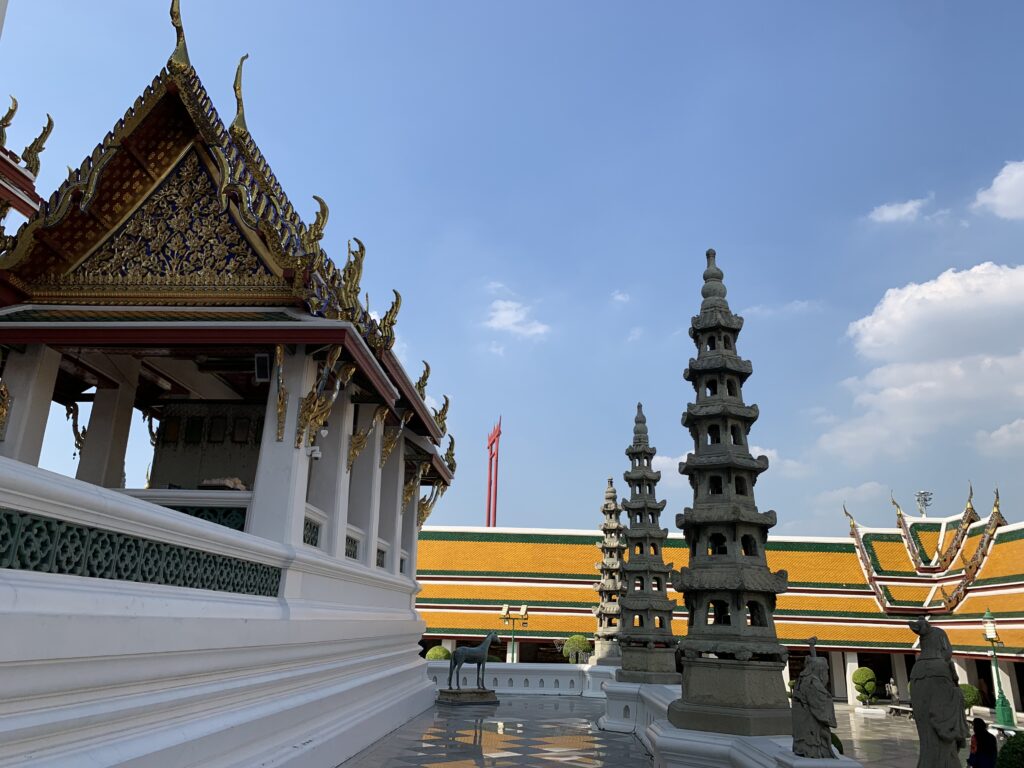
Wat Suthat is one of the city’s oldest and most important temples. Built during the reign of King Rama I in the late 18th century, it is known for its impressive architecture and stunning wall murals, depicting scenes from the life of the Buddha. The temple’s serene atmosphere makes it the perfect spot to rest and practice meditation.
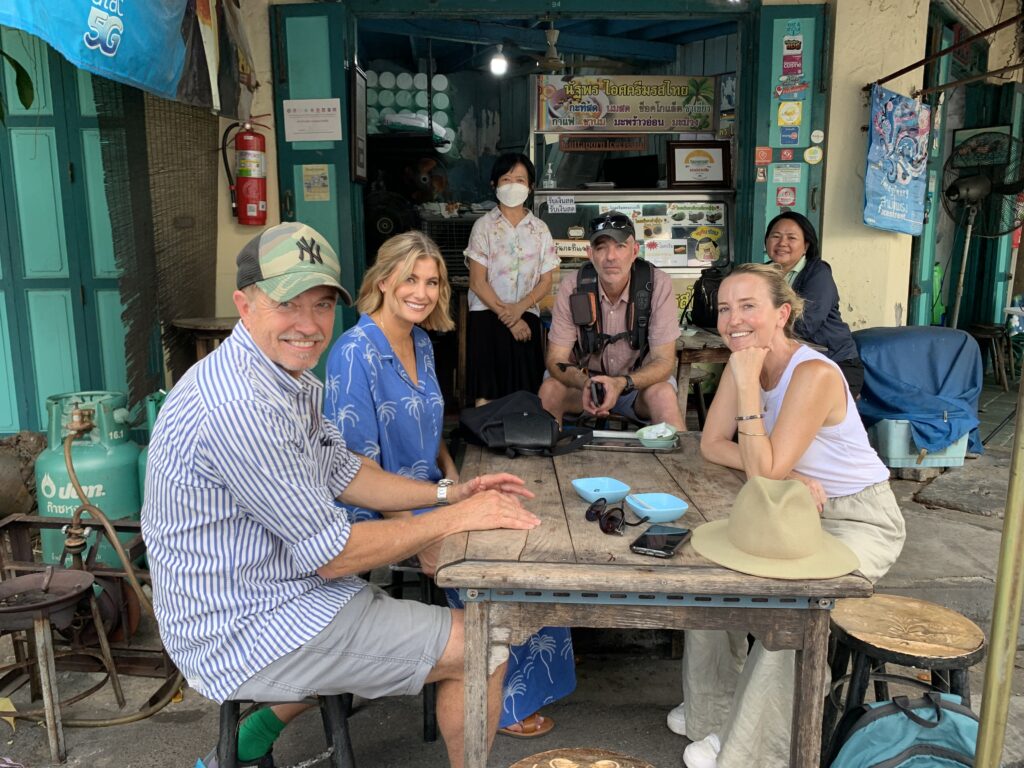
Wat SuthatK Panich is an iconic family-run eatery serveing delectable mango sticky rice made to a recipe that has been handed down the generations for 80 years. It has received Michelin Bib Gourmand for good quality, good value cooking.Praeng Phuthon is one of Bangkok’s most charming neighbourhoods, with historic shophouses selling delicious street food. This is Getaway film crew at Nattaporn ice cream shop.
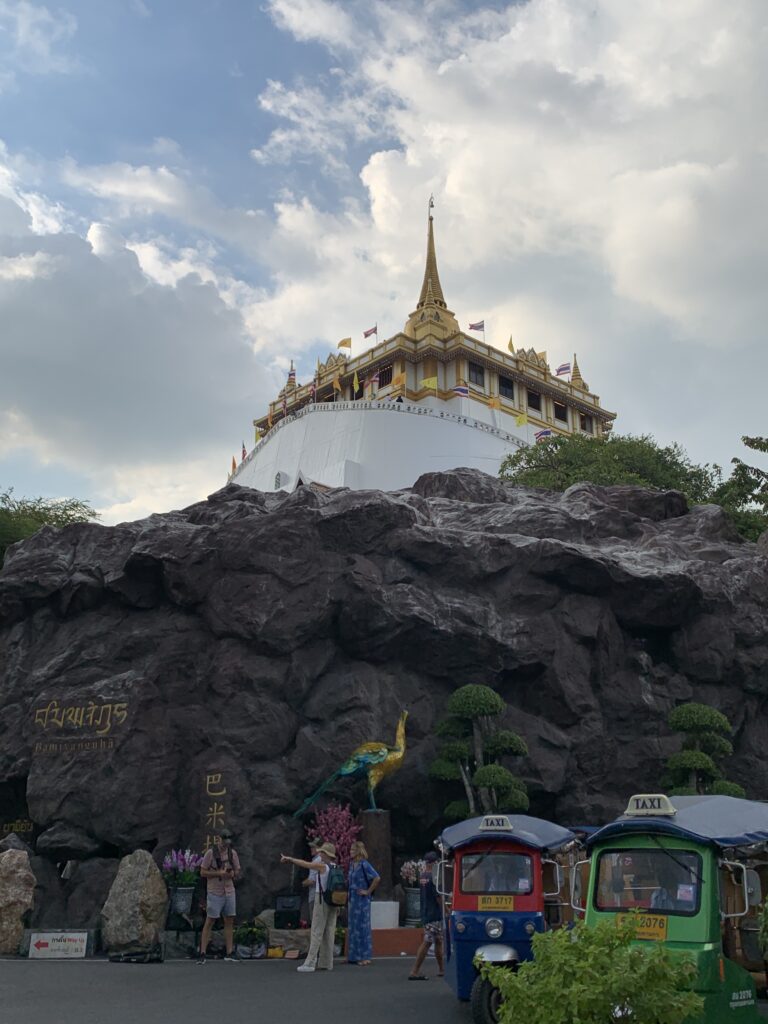
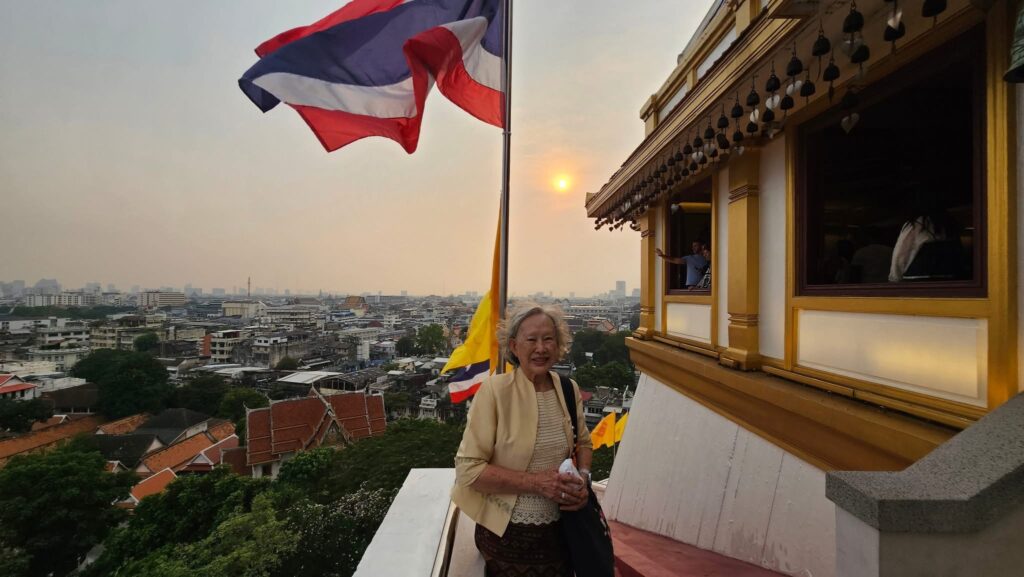
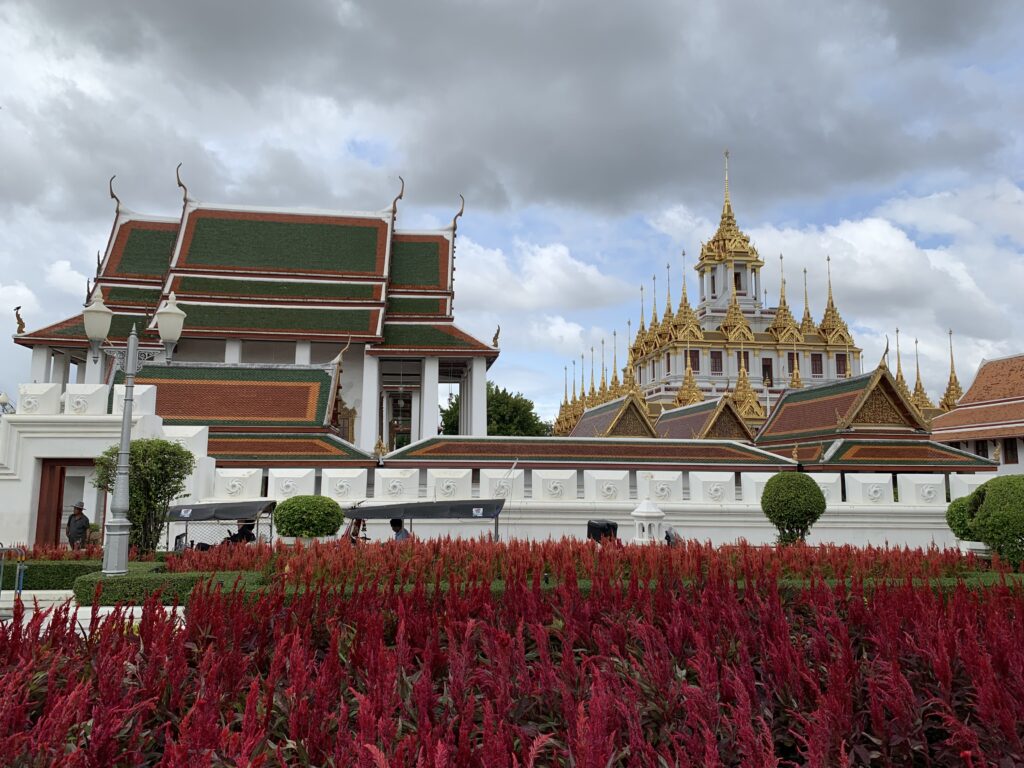
Along Dinso Road, I like the old fashioned Mit Ko Yuan Chinese – Thai restaurant. A little bit further along Maharat Road, you’ll find a treasure trove of street food – popular ones are Pad Thai Thipsamai and the Michelin starred Jay Fai. End at Wat Ratchanadda, with its striking metal spires and peaceful vibe. If you still have some energy left, walk your way up the top of the Golden Mount.
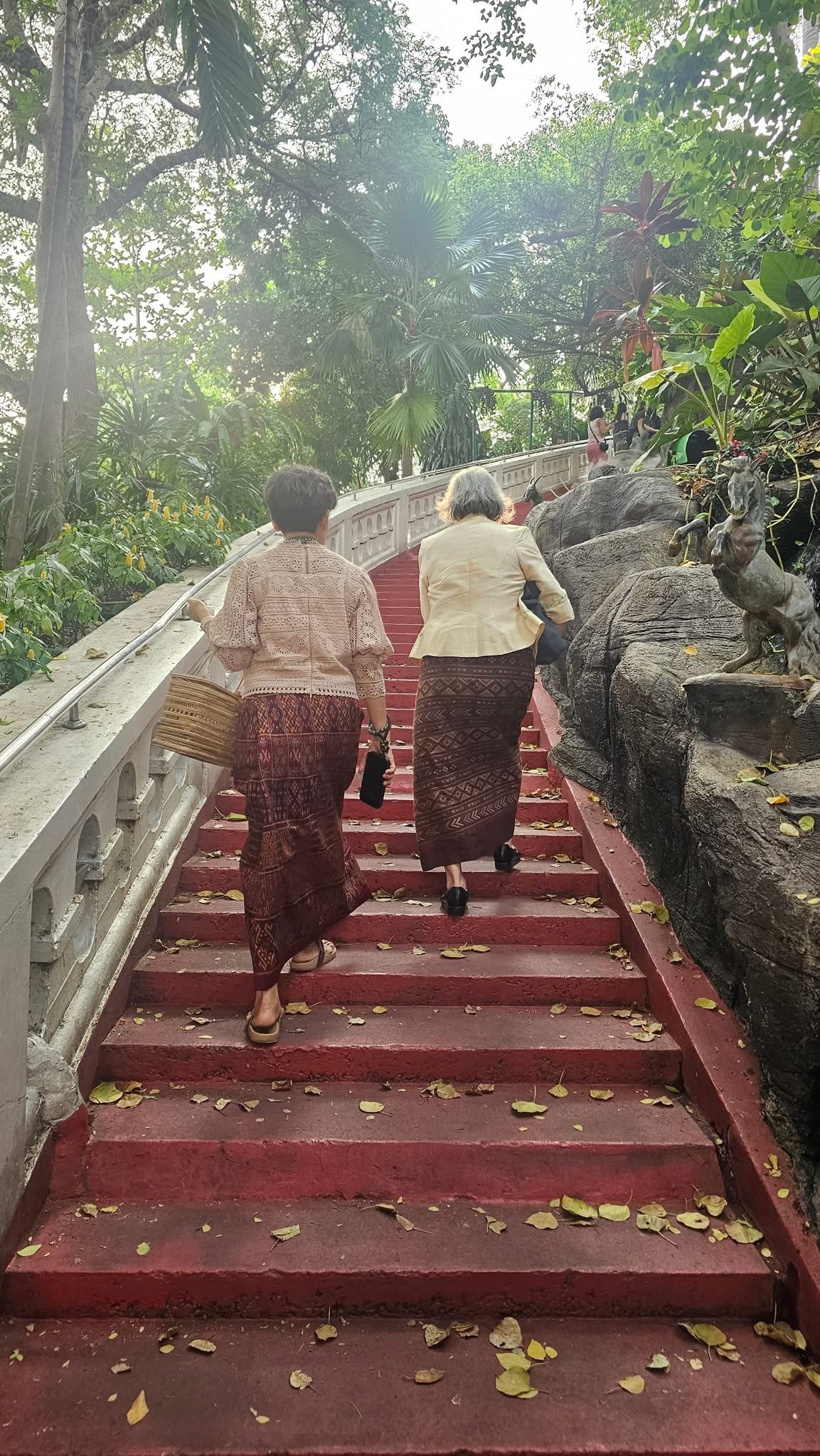
The Australian film crew at the bottom of the Golden Mount.My aunt in her late 70s who walked over 300 steps in Thai costume to the top of the Golden Mount.Wat Ratchanadda
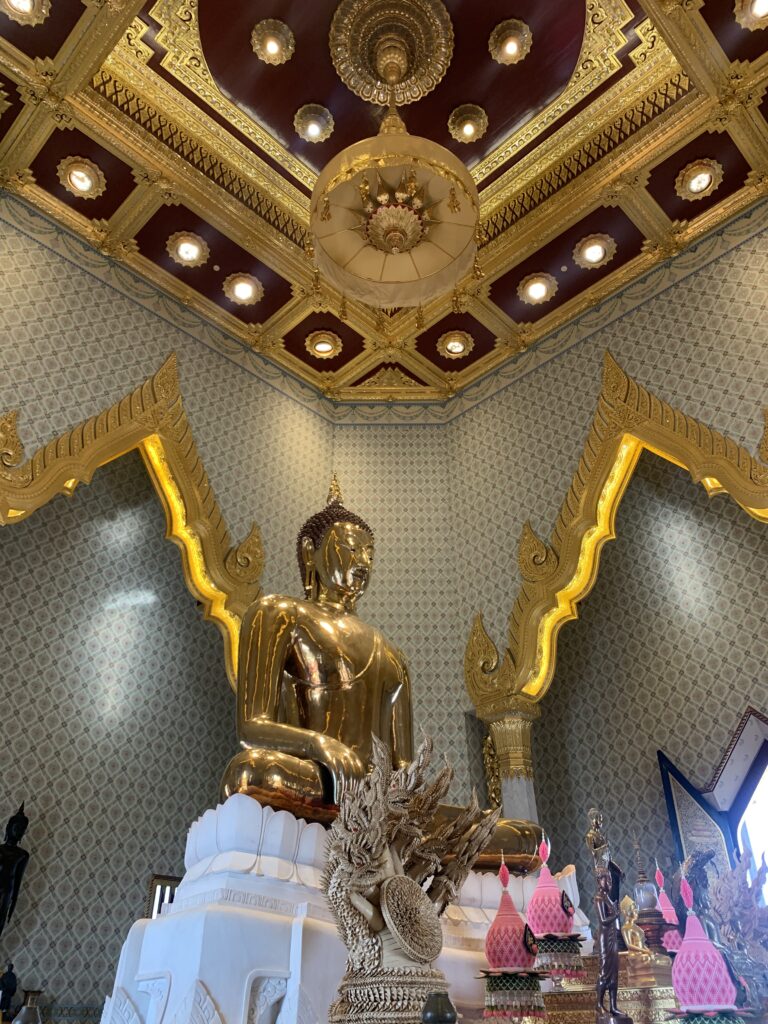
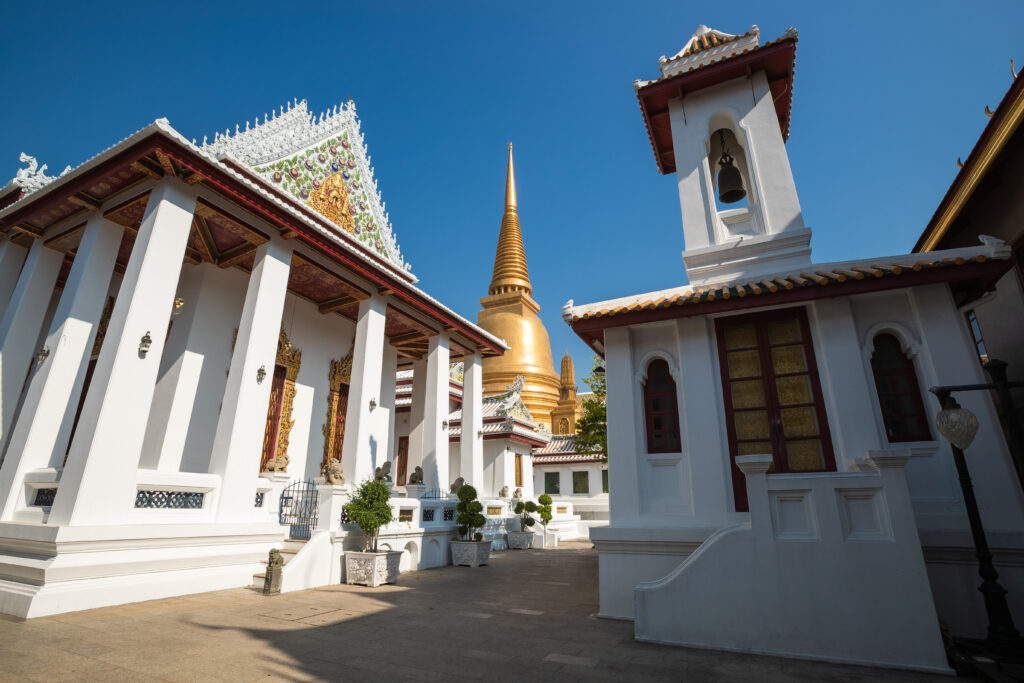
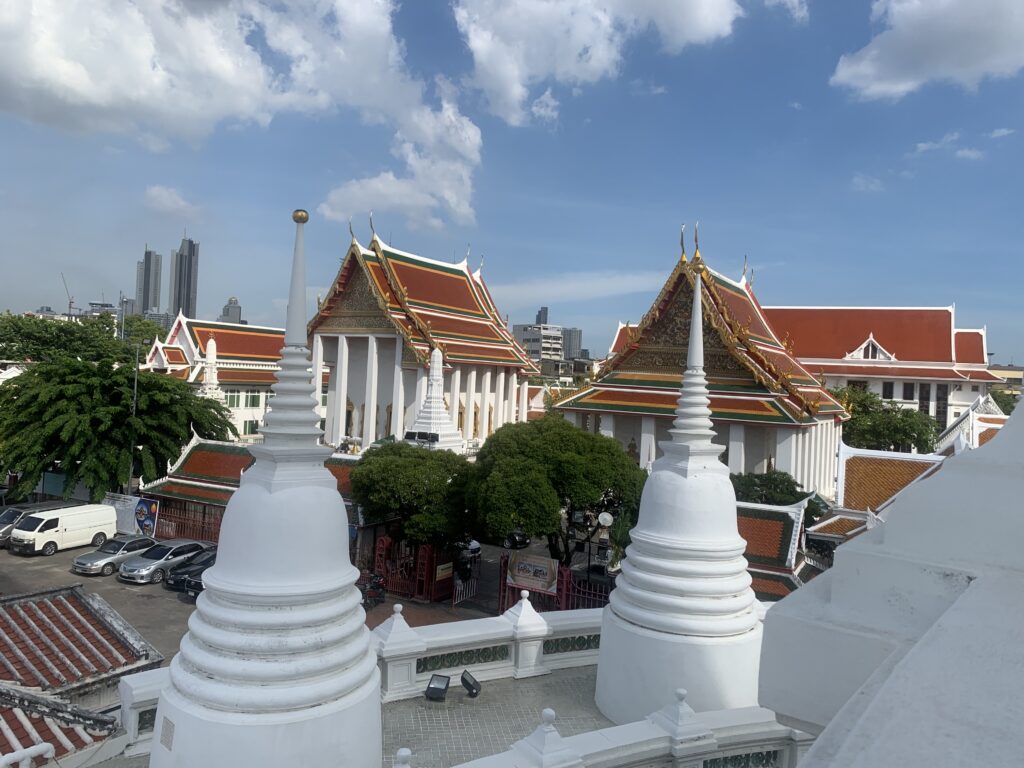
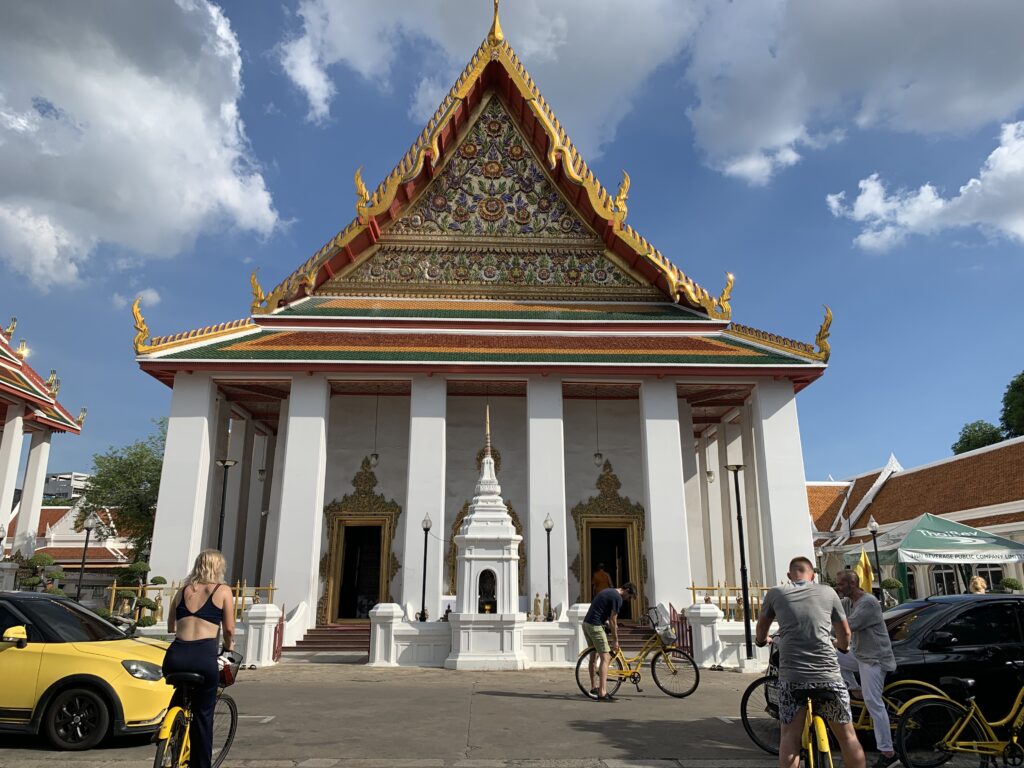
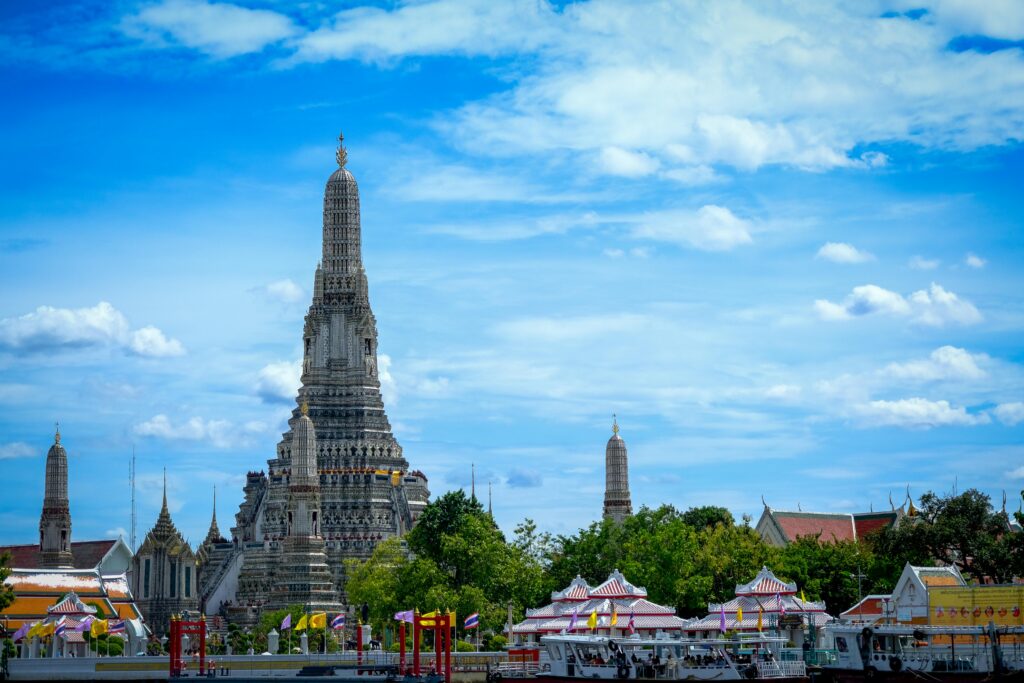
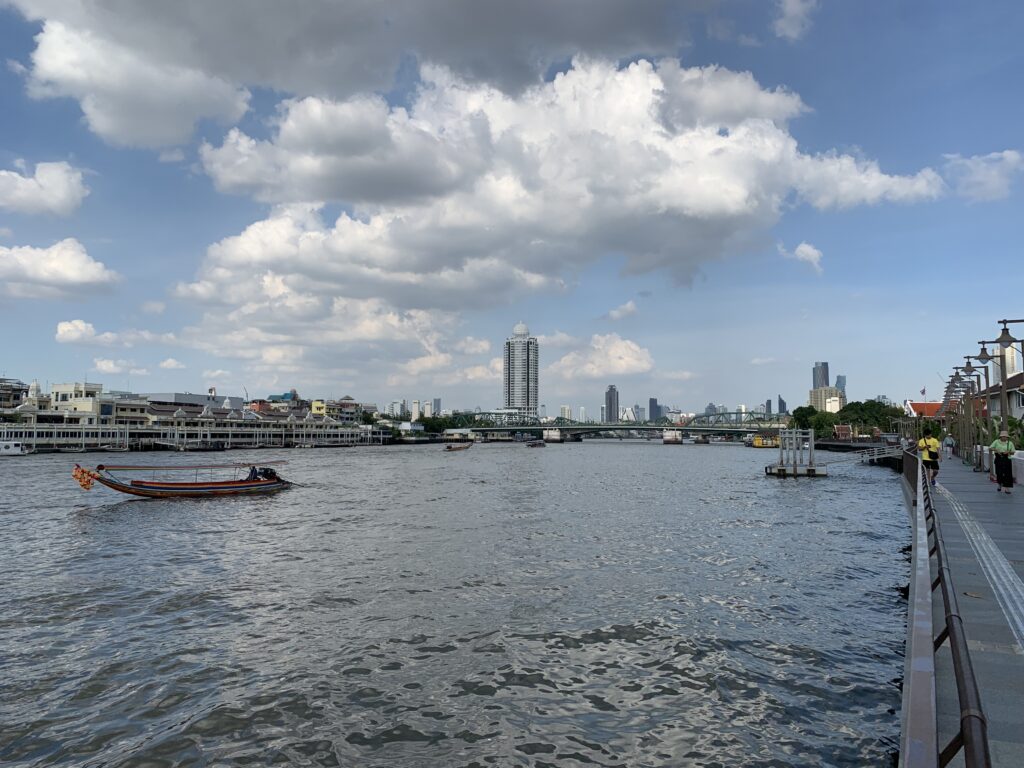
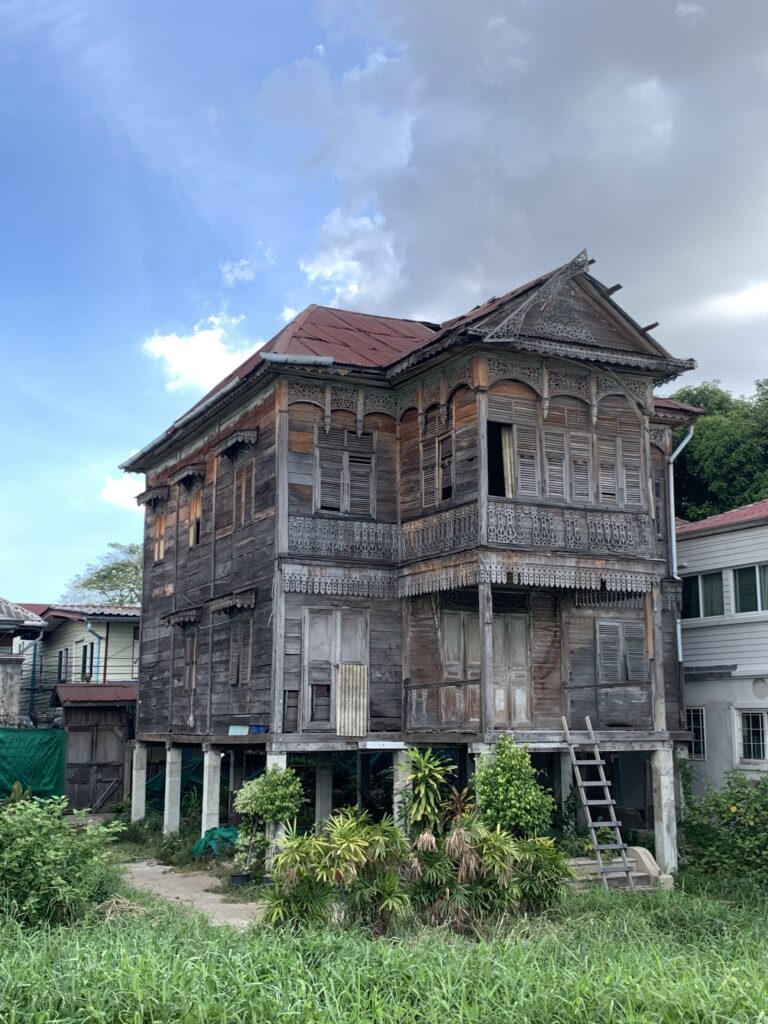
Wat Arun – Wat Kalayanamit – Wat Prayurawongsawat Visiting three temples in one go might sound like a lot – but trust me, each one has its own unique beauty and character. Start early at Wat Arun (Temple of Dawn) to avoid the big tour groups and enjoy the stunning riverside views. Then follow the river to Wat Kalayanamit, known for its giant seated Buddha and peaceful atmosphere. Finish at Wat Prayurawongsawat, a lesser-known gem with a charming white stupa and turtle pond. It’s a serene way to end your temple-hopping journey.
Wat PrayurawongsawatA group of tourists during their cycling tour in front of Wat KalayanamitWat ArunThe walkway connecting Kalayanamit to Wat PrayurawongsawatAn old teak house by the river
These walking routes are just a starting point of your discoveries. Wear comfy shoes, drink enough water and go at your own pace.